
The Passive House Premium: Cost vs Payback in NZ
There is no published sector wide figure for the Passive House premium in New Zealand, so the honest answer is a range. Most mainstream sources put it at roughly 5 to 15 percent, about 50,000 to 100,000 dollars on a 200 square metre home, while Sustainable Engineering has shown a certified Passive House built for the same price as a code home. The premium is falling as the Building Code catches up, and it typically pays back in about 9 to 22 years on energy alone, or under 10 years once health and comfort are counted.
Key Questions Answered
How much more does a Passive House cost in NZ?
There is no official sector wide figure. Most NZ sources land at 5 to 15 percent, roughly 50,000 to 100,000 dollars on a 200 square metre home, while cost neutral builds are documented (Sustainable Engineering).
Where does the extra money go?
High performance windows and doors are the largest share at 40 to 50 percent, then insulation and airtightness at 25 to 30 percent, then heat recovery ventilation at 15 to 20 percent, with modelling and design the rest (Builders Near Me).
How long is the payback period?
Roughly 9 to 22 years on energy savings alone, and under 10 years once fewer sick days and lower health costs are included (Smart Living Spaces, Quality Build).
Do Passive Houses resell for more?
There is no robust NZ resale figure yet, as too few have sold to measure it. The often quoted 9 percent uplift is from a United States study, so treat it with caution.
In This Guide
Key Takeaways
- No published sector wide NZ premium figure exists, so the honest answer is a range, not a single number.
- Most mainstream NZ sources land at 5 to 15 percent, about 50,000 to 100,000 dollars on a 200 square metre home (Quality Build via Goodwins), and cost neutral builds are documented (Sustainable Engineering).
- The premium is falling: the 2021 to 2023 H1 Building Code energy uplift raised the baseline, and the comparable Homestar premium dropped from about 4 percent in 2018 to under 1 percent by 2025 (Infometrics).
- The money concentrates in glazing at 40 to 50 percent of the premium, then insulation and airtightness, then heat recovery ventilation (Builders Near Me).
- Payback is about 9 to 22 years on energy alone, and under 10 years with health and comfort counted; the 9 percent resale premium often cited is United States data, not New Zealand.

How much more does a Passive House cost in NZ?
The honest answer is a range, not a single number. Most mainstream New Zealand sources put the Passive House premium at roughly 5 to 15 percent of build cost, which works out to about 50,000 to 100,000 dollars on a 200 square metre home (Quality Build, via Goodwins). That is the figure to plan around.
The full published spread is wider, from about 0 to 20 percent or more. At the low end, Sustainable Engineering has documented a certified Passive House built for less than 3,000 dollars per square metre, about average for a one off home, which makes it cost neutral. At the high end, some eco build guides quote 20 percent or more. The spread itself is the truth here: the premium depends far more on design, form and how early the team is engaged than on any fixed surcharge. For the wider picture on what a Passive House costs, see our guide on how much a Passive House costs in NZ.
Where does the extra money actually go?
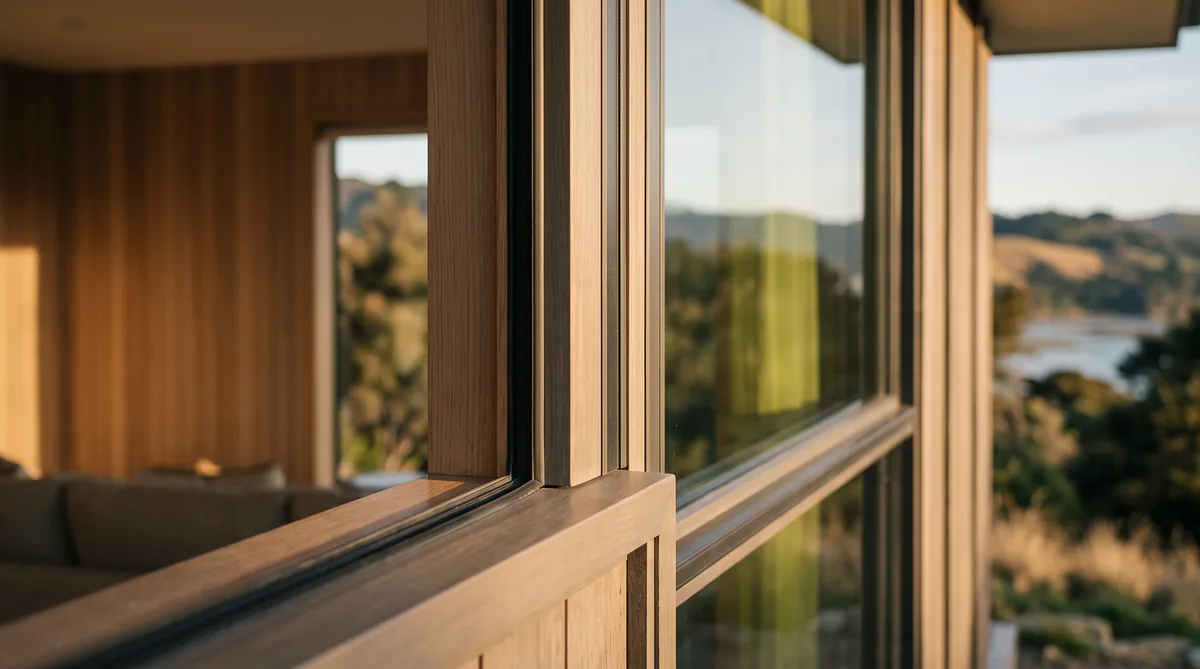
The premium is not spread evenly across the build. It concentrates in a small number of line items, which is exactly why it can be managed without losing performance. High performance windows and doors are the single largest share at roughly 40 to 50 percent of the premium, followed by insulation and airtightness detailing, then heat recovery ventilation (Builders Near Me).
| Where the premium goes | Approximate share | What it buys |
|---|---|---|
| High performance windows and doors | 40 to 50% | Triple or high spec double glazing, insulated frames, no cold surfaces |
| Insulation and airtightness | 25 to 30% | Continuous insulation and a tested, sealed envelope |
| Heat recovery ventilation (MVHR) | 15 to 20% | Constant filtered fresh air with most of the heat retained |
| Modelling, design and certification | 5 to 10% | PHPP energy modelling and quality assurance testing |
Because the money sits in so few places, small design decisions move the total a long way. Specifying the right glazing for each elevation rather than the most expensive option everywhere controls the biggest line, while a simple, well oriented form keeps the airtightness and ventilation work efficient. That is why engaging the builder before the design is locked in is the strongest lever on the premium.
How long is the payback period?
On energy savings alone, the payback runs from about 9 to 22 years, depending on the home, the site and how you live. The short end comes from a worked New Zealand example where roughly 6,660 dollars a year of energy savings recovered a 65,000 dollar premium in about 9.25 years (Smart Living Spaces). The long end, just under 22 years, comes from a smaller home with a modest annual saving (Your Money Blueprint).
Those figures count only the power bill. Once you add fewer sick days, fewer doctor visits and the reduced risk of damp and mould, the payback shortens to under 10 years (Quality Build). New Zealand insulation and heating research supports this: He Kainga Oranga at the University of Otago found a benefit to cost ratio of about 4 to 1, meaning every 1,000 dollars invested in a warmer, drier home returns more than 4,000 dollars in health and energy benefits. For the running cost side of this in detail, see our companion guide on what it costs to run a Passive House, and for the wider case, whether a Passive House is worth it.
Does a Passive House hold its value at resale?
Almost certainly, but the New Zealand evidence is genuinely thin, and it is important to be straight about that. Too few certified Passive Houses have sold here to measure a real resale premium, so there is no robust local figure. One New Zealand valuation put a certified home about 12 percent higher, but that is a single anecdote, not a dataset.
The often quoted figure of around 9 percent comes from a Californian Passive House study, and other United States research on green and high performance homes lands lower, at roughly 2 to 6 percent. These are useful signals of direction, but they are overseas markets with different buyers and different energy prices, so they should be flagged as such and not treated as a New Zealand number. The sensible position is to build a Passive House for the decades of comfort, health and low running costs you will actually use, and to treat any resale uplift as a likely bonus rather than a figure to count on.
What is the bottom line?
There is no official Passive House premium figure in New Zealand, so plan around the honest range: roughly 5 to 15 percent, about 50,000 to 100,000 dollars on a 200 square metre home, knowing that a well managed project can push toward the bottom of that and even reach cost neutral (Sustainable Engineering). The premium is falling as the Building Code catches up, most of it sits in glazing, airtightness and ventilation, and it typically pays back in about 9 to 22 years on energy alone, or under 10 years once health is counted.
The one figure to hold at arm’s length is resale. The 9 percent often quoted is United States data, and New Zealand has no reliable resale number yet. The way to make the premium work is the same as the way to shrink it: engage a Passive House builder early, price the specific home in the open, and design to the standard from day one. This is the heart of Ecotectural’s design and build approach. If you are planning a home in Nelson Tasman, the best first step is to arrange a consultation before the design is locked in.

Frequently Asked Questions
Is there an official Passive House premium figure for New Zealand?
No. Several New Zealand sources openly concede there is no published sector wide dataset on the exact premium, because too few certified homes have been built and priced side by side with code equivalents. That is why the honest answer is a spread of roughly 0 to 15 percent, not a single percentage.
Can a Passive House really cost the same as a code home?
It can, in the right hands. Sustainable Engineering has documented a certified Passive House built for less than 3,000 dollars per square metre, about average for a one off home of its type. Cost neutral is not typical, but it shows the premium is a design and management outcome, not a fixed surcharge.
Why is the premium getting smaller over time?
New Zealand raised its Building Code energy requirements through the 2021 to 2023 H1 changes, which lifted the minimum legal standard closer to high performance. As the baseline rises, less extra work is needed to reach the Passive House standard, so the gap narrows. The Homestar premium fell the same way, from about 4 percent to under 1 percent (Infometrics).
What is the fastest way to shrink the premium on my build?
Engage the builder early, before the design is locked in, so the home is designed to the standard efficiently rather than redesigned late. A simple, well oriented form and glazing specified for each elevation control the largest costs. This is the core of an early engaged design and build approach.
Does the payback include anything beyond energy bills?
The 9 to 22 year range is energy alone. Once you count fewer sick days, fewer doctor visits and the reduced risk of damp and mould, the payback shortens to under 10 years (Quality Build). New Zealand insulation and heating research shows a benefit to cost ratio of about 4 to 1 (He Kainga Oranga).
Will a Passive House be worth more when I sell?
Probably, but the New Zealand evidence is thin. Transaction volumes are still too low to measure a genuine resale premium here, and the figures people quote, such as a 9 percent uplift, come from United States studies. Treat resale as a likely bonus, not a number to bank on.
Research Report: The Passive House Premium and Payback in New Zealand
Read Full ReportWhat the premium really is, why it is falling, and how long it takes to pay back, grounded in NZ building science and economics sources.
Planning a build in Nelson Tasman?
Talk to Ecotectural early and keep control of your design and budget from day one.
Arrange a consultation