

Heat-Pump Hot Water for a New Home: Is It Worth It?
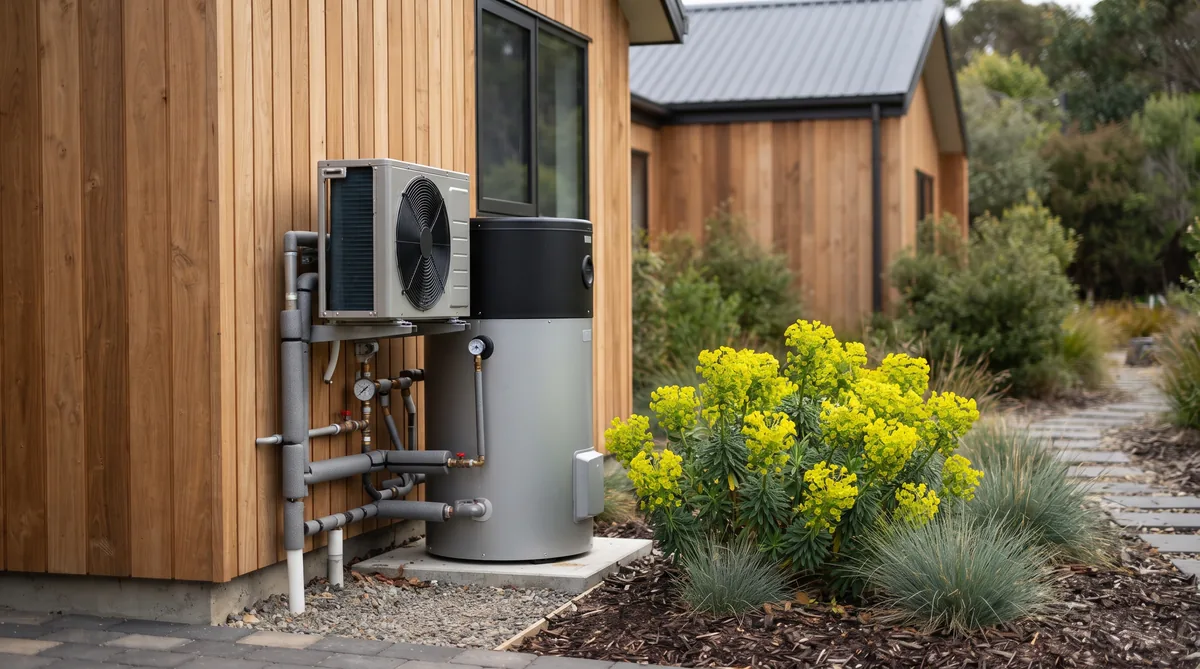
A heat-pump hot water system uses a small heat pump to move warmth from the outside air into your cylinder, rather than burning electricity through a resistance element, so it uses a fraction of the energy for the same hot water. For a new home in the mild Nelson Tasman climate it is usually worth it, because hot water is one of the largest single energy uses in a well-built home and the mild coastal air suits a heat pump for most of the year. The trade-offs are a higher upfront cost, some thought about where to site the unit, a little fan noise, and slightly slower recovery in a cold snap. Paired with good design and solar, it is one of the quieter ways to lower a home’s running cost for the life of the building.
Key Questions Answered
What is a heat-pump hot water system?
A cylinder heated by a small heat pump that draws warmth from the outside air, rather than a resistance element that turns electricity straight into heat. For the same tank of hot water it uses far less electricity, because it moves heat instead of making it.
How does it compare to electric or gas?
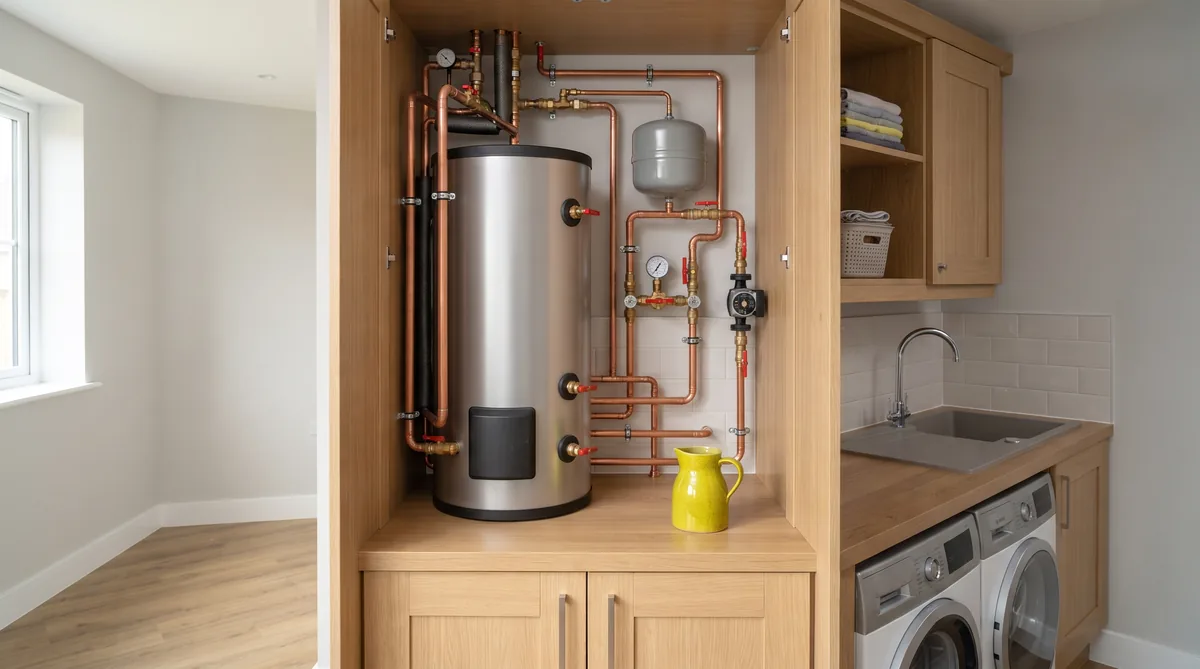
A standard electric cylinder is cheap to install but the most expensive to run. Gas avoids peak electricity but burns fossil fuel and adds a combustion appliance. A heat-pump cylinder costs more upfront and runs on the least energy of the three.
Does it suit the Nelson Tasman climate?
Yes. The region’s mild, relatively frost-light coastal air is close to ideal for an air-to-water heat pump, which works hardest when the air is cold. Performance dips a little on the coldest winter mornings but recovers quickly.
What are the trade-offs?
A higher purchase price, a sensible outdoor or garage location with airflow and a condensate drain, a low hum from the fan, and slower recovery in a cold snap. None is a dealbreaker in a home designed for it from the start.
How does it fit an energy efficient home?
Hot water is a big share of a well-built home’s energy use, so a low-energy cylinder matters more once heating demand is already small. It pairs naturally with rooftop solar, using daytime generation to heat water for the evening.
In This Guide
Key Takeaways
- A heat-pump hot water system moves heat from the outside air into the cylinder rather than burning electricity through an element, so it uses far less energy for the same hot water.
- Against a standard electric cylinder and gas, the heat pump costs more to install but runs on the least energy, which is where it earns its keep over the life of the home.
- The mild Nelson Tasman climate suits an air-to-water heat pump well, with only a small performance dip on the coldest winter mornings.
- The honest trade-offs are upfront cost, a sensible location with airflow and a drain, a little fan noise, and slower recovery in a cold snap, all manageable when designed in early.
- In an energy efficient home, where heating demand is already low, hot water becomes a larger share of the total, so a low-energy cylinder paired with solar is a sensible long-term choice.
What is a heat-pump hot water system?
A heat-pump hot water system is a cylinder heated by a small heat pump that draws warmth from the outside air, rather than a resistance element that turns electricity straight into heat. Because it moves heat instead of making it, it delivers the same tank of hot water for a fraction of the electricity.
The idea is the same one that heats a room with a space-heating heat pump, turned to the job of heating water. A fan pulls in outside air, a refrigerant cycle lifts that low-grade warmth to a useful temperature, and the heat is passed into the cylinder. A conventional electric cylinder, by contrast, works like a giant kettle: every unit of electricity becomes one unit of heat. A heat pump returns several units of heat for each unit of electricity it draws, which is why the Energy Efficiency and Conservation Authority, through its Gen Less programme, lists heat-pump water heating among the lower-running-cost options for a New Zealand home. For a home you intend to keep for decades, that difference compounds quietly, year after year.
How does it compare to electric or gas?
A standard electric cylinder is the cheapest to install and the most expensive to run. Gas sidesteps peak electricity but burns a fossil fuel and adds a combustion appliance. A heat-pump cylinder costs the most upfront and runs on the least energy of the three, which is the whole point of choosing it.
Each has a place, so the honest question is not which is best in the abstract but which suits a new energy efficient home you plan to live in for a long time. The table below sets the three side by side on the measure that matters most over the life of the building, how much energy each uses to deliver the same hot water.
| Hot water system | Running efficiency | Note |
|---|---|---|
| Heat-pump cylinder | Highest; moves heat from the air, returning several units of heat per unit of electricity | Dearest to install, cheapest to run; pairs well with rooftop solar; a little fan noise and a sensible location needed |
| Standard electric cylinder | Lowest; a resistance element turns each unit of electricity into one unit of heat | Cheapest to install, dearest to run; simple and reliable, with no outdoor unit or drain |
| Gas (instant or storage) | Moderate; burns fuel directly rather than moving heat | Avoids peak electricity but uses a fossil fuel, needs a flue, and ties the home to a delivered or reticulated supply |
The pattern is consistent: the heat pump asks for more at the start and gives it back in running cost. In a home where the rest of the energy budget is already small, that is usually the sensible trade to make, and EECA’s Gen Less programme is a good neutral place to compare the running-cost figures for your own household.
Does it suit the Nelson Tasman climate?
Yes. An air-to-water heat pump draws heat from the outside air, so it works best where winters are mild, and the Nelson Tasman coast is one of the milder, more sheltered corners of the country. The relatively frost-light climate is close to ideal for this kind of system for most of the year.
A heat pump’s output does soften as the air gets colder, so the coldest winter mornings are when recovery slows a little. In practice this is a design question rather than a problem: the cylinder is sized for the household so there is always a sensible reserve of hot water, and most units carry a small backup element for the rare extremes. The same regional thinking that shapes how we design for the sun applies to services like this, which is why we consider orientation, shading and the site’s microclimate together, as our guide to designing for the Nelson Tasman sun sets out. Get the site reading right and the mild climate does most of the work for you.
What are the trade-offs?
The trade-offs are a higher upfront cost, a bit of thought about where the unit sits, a low fan hum, and slightly slower recovery in a cold snap. None of them is a dealbreaker in a home designed for the system from the start, which is exactly the moment to make these decisions.
Location is the one most worth getting right. The unit needs outside air, so it lives outdoors or in a ventilated garage with clearance for airflow and a run to a condensate drain, sited away from bedroom windows and a neighbour’s boundary so the fan hum is never an issue. The upfront cost is real, though it is the running cost that tells over the decades you own the home. Recovery in the coldest weather is handled by sizing the cylinder properly and, where needed, the backup element. All of this is straightforward when the hot water system is resolved on paper alongside heating and glazing, rather than chosen late as a fitting. Because Ecotectural prices open-book, a promise we call Built in the Open, you see exactly what the system costs rather than finding it buried in a lump sum, and we build in a 10 percent contingency as a matter of course.
How does it fit an energy efficient home?
In an energy efficient home, heating demand is already small, so hot water becomes a larger share of the total energy the house uses. That is precisely why a low-energy cylinder earns its place, and why it pairs so naturally with rooftop solar and a well-insulated, airtight envelope.
The logic is simple. When you build to a high standard, with a continuous insulated and airtight envelope designed to Passive House principles, the energy needed to keep the home warm drops to a fraction of an ordinary house, as our guide to heating a high-performance home explains. Once heating is that low, hot water and appliances are what is left, so shrinking the hot water load matters more, not less. A heat-pump cylinder does that, and it dovetails with solar because water is an easy thing to store energy in: a controller can heat the cylinder during the day when the panels are generating, then hold that heat for the evening, which our guide to solar and batteries for a new home works through. The result is the kind of quiet, low-running-cost comfort described in living in a high-performance home, where the systems simply do their job in the background. It is the same discipline that BRANZ and PHINZ encourage: treat the home as one connected system, not a box of separate appliances.
What is the bottom line?
A heat-pump hot water system uses a small heat pump to draw warmth from the air, so it delivers the same hot water for far less electricity than a standard cylinder, and generally makes sense for a new home in the mild Nelson Tasman climate. It costs more upfront, needs a sensible location and hums a little, but it repays that over the decades you live there, especially in an energy efficient home paired with solar.
The value comes from deciding it early, alongside heating, glazing and the envelope, rather than fitting it late. Ecotectural has designed and built architectural homes across Nelson Tasman since 2006, resolving services like hot water at the concept stage through our Around One Table approach and pricing every build openly under Built in the Open. If you are weighing up how to make a new home comfortable and cheap to run for the long term, the best first step is to arrange a consultation before the design is locked in, and you can see how we work on our design and build page.
Frequently Asked Questions
Is a heat-pump hot water system worth the extra cost?
For a new home you plan to keep, usually yes. It costs more to install than a standard electric cylinder but uses much less electricity to deliver the same hot water, so the gap narrows over the years you live there. Because hot water is a large share of a well-built home’s energy use, the saving is meaningful rather than marginal. EECA’s Gen Less programme is a good neutral source for comparing running costs.
Will it still make hot water on a cold Nelson morning?
Yes. An air-to-water heat pump works hardest when the air is cold, and Nelson Tasman’s coastal winters are mild by New Zealand standards. Recovery is a little slower on the coldest mornings, which is why the cylinder is sized for the household and a well-designed system keeps a sensible reserve of hot water. Most units also carry a backup element for the rare extremes.
How noisy is a heat-pump hot water unit?
It produces a low fan hum, similar in character to a space-heating heat pump’s outdoor unit, only running when the cylinder is heating. Sited away from bedroom windows and a neighbour’s boundary, with a little clearance for airflow, it is unobtrusive. Getting the location right at design stage removes the issue before it exists.
Is gas hot water a better option for a new build?
Gas avoids drawing on peak electricity, but it burns a fossil fuel, adds a combustion appliance and its flue, and ties the home to a delivered or reticulated fuel. For a new energy efficient home built to last, an efficient electric system that can run on rooftop solar is generally the more future-proof choice. We would talk this through for your specific site rather than assume.
Can a heat-pump cylinder run on solar power?
Yes, and the pairing is a natural one. Water is an easy thing to store energy in, so a controller can heat the cylinder during the day when rooftop solar is generating, then hold that heat for the evening. Our guide to solar and batteries for a new home works through how the pieces fit together.
Does Ecotectural specify heat-pump hot water?
Where it suits the home and the household, yes. Ecotectural has designed and built architectural homes across Nelson Tasman since 2006, and we resolve the hot water system alongside heating, glazing and solar at the concept stage rather than treating it as a late fitting, using an approach we call Around One Table.
Research Report: Heat-Pump Hot Water for a New Home
Read Full ReportHow heat-pump hot water works, how it compares with electric and gas, its fit for the Nelson Tasman climate, the trade-offs, and its place in an energy efficient home.
Planning a build in Nelson Tasman?
Talk to Ecotectural early and keep control of your design and budget from day one.
Arrange a consultation