

Do You Need a Fireplace in a High-Performance Home?
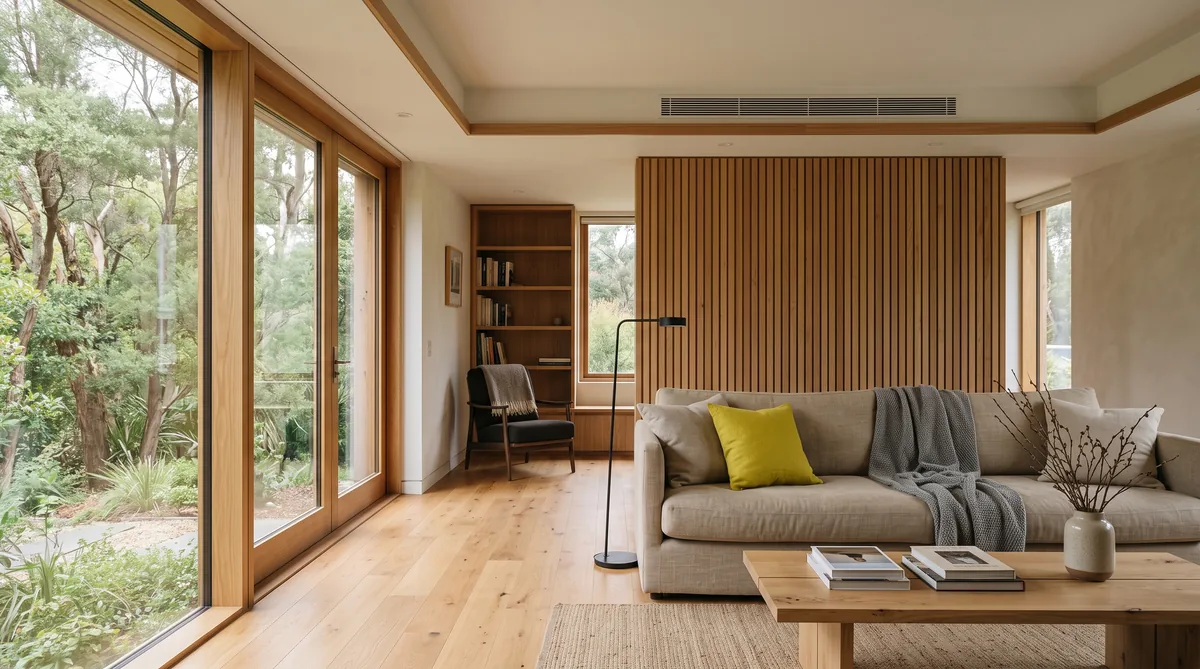
You almost certainly do not need a fireplace in a high-performance home, because a well insulated, airtight, well oriented home needs very little heating, and a big fire can quickly overheat an open-plan living space. The stronger pull is emotional, the look and feel of a real flame, and that is a fair reason to want one, just not a reason of comfort. The real problem is airtightness: an open wood fire draws air from the room and works against the sealed envelope the whole home depends on. If a fire genuinely matters to you, a sealed, external-air, room-sealed wood burner is the only sensible option. Otherwise a single heat pump, or an electric feature flame, gives you the warmth or the ambience without fighting the building.
Key Questions Answered
Do you need a fireplace in a Passive Home?
As a heat source, almost never. A well insulated, airtight, well oriented home holds a steady temperature with very little added heat, so a big fire is usually unnecessary and often overheats an open-plan living space. Wanting one is mostly about the feeling of a flame, which is a fair reason, just not one of comfort.
Why does a high-performance home need so little heating?
Because the envelope keeps the warmth in. Continuous insulation, airtightness and good orientation, the ideas behind Passive House principles, mean the home barely loses heat, so it stays comfortable on a small, gentle input rather than a big burst from a fire.
What is the problem with an open fire in an airtight home?
An open wood fire draws large volumes of air from the room to feed combustion, which fights the sealed envelope the home relies on, pulls in cold replacement air and can disturb the ventilation system. It undermines the airtightness that makes the home perform.
Can you have any fire at all?
Yes, if it is the right type. A sealed, room-sealed wood burner that takes its combustion air directly from outside through a dedicated duct, and is fully sealed from the room, is the only sensible option, because it does not rob the room of air or breach the airtight layer.
What are the alternatives?
A single well placed heat pump usually covers the whole home, giving gentle, controllable warmth. For the look of a flame without the heat or the airtightness problem, an electric feature fireplace provides the ambience. Both avoid working against the sealed envelope.
In This Guide
Key Takeaways
- A well insulated, airtight, well oriented home, designed to Passive House principles, needs very little heating, so a large fireplace is usually unnecessary and can overheat an open-plan living space.
- The real reason most people want a fireplace is emotional, the pull of a real flame, which is a fair thing to want but should be separated from any claim that you need it for warmth.
- An open wood fire draws air from the room to burn, which works directly against the sealed, airtight envelope the home depends on, as explained by PHINZ and BRANZ guidance on airtightness.
- If a fire genuinely matters, a sealed, external-air, room-sealed wood burner is the only sensible option, because it takes combustion air from outside and does not breach the airtight layer.
- A single heat pump, or an electric feature flame, gives you the warmth or the ambience without fighting the building, and the choice is best resolved at concept, on paper, while it is still cheap to change.
Why do people still want a fireplace?
People still want a fireplace because a real flame does something no thermostat can. The reason is almost entirely emotional, the movement and warmth of a fire, the memory of one, the pull of a room with a hearth at its centre. That is a fair thing to want, and worth naming honestly, because it is a very different reason from needing heat.
Separating the want from the need is the whole point of this article. A fireplace as a focal point, a ritual on a cold Nelson evening, is a legitimate design choice. A fireplace as the way you keep a modern, well built home warm is, in most cases, solving a problem the home has already solved. Once you can see which of the two you are actually after, the decision gets much simpler, and much cheaper to get right. If the emotional pull is strong, there are ways to have it without working against the building, which is what the rest of this guide sets out.
Why does a high-performance home need so little heating?
A high-performance home needs very little heating because it barely loses any. A continuous layer of insulation, a genuinely airtight envelope and sensible orientation to the sun mean the warmth you put in stays in, so the home holds a steady, comfortable temperature on a small, gentle input rather than a big burst of heat from a fire.
These are the ideas behind Passive House principles, set out in our guide to the five Passive House principles: insulate continuously, seal the envelope, orient for the sun, use good glazing and ventilate with control. PHINZ and BRANZ both point to the same physics, that a well built envelope changes how much heating a home actually requires. The practical result is that a large fireplace is not just unnecessary, it is often counter-productive. In an open-plan living space with very low heat loss, even a modest wood burner produces far more energy than the room can shed, so the space overheats and you open windows to cope, letting out the warmth you paid to keep. For how little a properly built home really needs, and how it is best supplied, see our guide on heating a high-performance home.
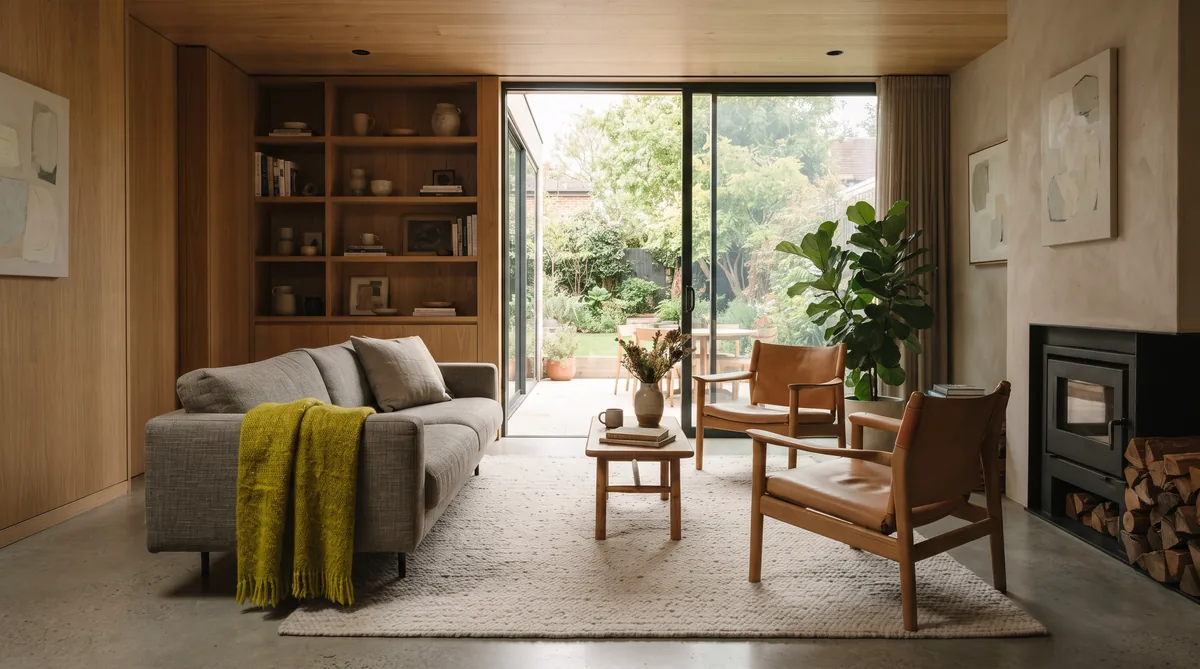
Can you have a fireplace in an airtight home?
You can, but only the right kind. An ordinary open wood fire draws a large volume of air from the room to feed the flames, and in an airtight home that is exactly the wrong thing, because it pulls against the sealed envelope the whole home relies on and sucks cold replacement air in through any weakness it can find.
Airtightness is not a detail you can casually breach, as our guide on airtightness and why it matters explains. An air-hungry open fire fights it directly: it depressurises the house, can draw against a heat recovery ventilation system, and undermines the very thing that makes the home comfortable and efficient. The sensible answer is a sealed, room-sealed wood burner that takes all of its combustion air from outside through a dedicated duct, with a fully sealed firebox and flue, so the burning process never touches the room air or breaks the airtight layer. That is the only wood fire that belongs in a genuinely airtight home. The table below sets the options against how well each one actually fits.
| Option | Fit with an airtight home |
|---|---|
| Open wood fire | Poor. Draws room air to burn, works against the sealed envelope, pulls in cold replacement air and can disturb the ventilation. Best avoided. |
| Room-sealed wood burner (external air) | Workable. Combustion air is ducted from outside and the firebox is sealed from the room, so the airtight layer stays intact. The only sensible way to have a real fire. |
| Heat pump only | Excellent. No combustion, no air drawn from the room, no breach of the envelope. A single well placed unit usually covers the whole home. |
The distinction is not fussiness. It is the difference between a fire that works with the building and one that quietly works against everything the design is trying to achieve.
What are the alternatives?
The two strong alternatives are a single heat pump for the warmth, and an electric feature flame for the look. Between them they cover the two real reasons anyone raises a fireplace, comfort and ambience, without asking the home to fight its own airtight envelope.
For heat, a well placed heat pump is usually all a high-performance home needs, because the heating demand is so low that one gentle, controllable source does the job the whole way through winter. It pairs naturally with the balanced ventilation a sealed home already runs, covered in our guide on heat recovery ventilation. For the feeling of a fire, an electric feature fireplace gives you a flame effect and a focal point with no combustion, no room air drawn away and no hole in the airtight layer, which is the honest answer when what you truly want is the ambience rather than another heat source. And if a real wood fire is non-negotiable, the room-sealed, external-air burner from the previous section is the version that respects the building. None of these force a trade-off between the home you want to look at and the home you want to live in.
How do you decide?
Decide by separating want from need, then settling it early. Ask yourself plainly whether you want warmth or you want a flame, because the honest answer points straight at the option. If it is warmth, the home already has that covered; if it is the flame, choose the version that does not undermine the envelope.
The timing matters as much as the choice. A fireplace touches the airtight layer, the flue penetration, the hearth structure and the heating strategy all at once, so it is far cheaper and cleaner to resolve on paper than to retrofit into a finished, sealed home. This is why we settle it at the design stage, around one table, with the right architect and an energy-literate engineer considering the home’s low heating demand from the first concept, rather than adding a fire late and working around it. It is also a genuine cost question, handled openly. We price open-book, a promise we call Built in the Open, with the builder’s margin agreed up front, and we build in a 10 percent contingency as a matter of course, on the plain logic that if you cannot afford the contingency, you cannot afford to build. You can see how we approach these decisions on our design and build page.
What is the bottom line?
You do not need a fireplace in a high-performance home. A well insulated, airtight, well oriented home, designed to Passive House principles, needs so little heating that a big fire is usually unnecessary and can overheat an open-plan living space. Wanting one is mostly emotional, which is fair, but it should be separated from any claim of comfort. If a fire truly matters, a sealed, external-air, room-sealed wood burner is the only sensible option, because it does not rob the room of air or breach the airtight layer; otherwise a single heat pump or an electric feature flame gives you the warmth or the ambience without fighting the building.
The decision is easiest, and cheapest, when it is made on paper before construction. Ecotectural has designed and built architectural homes across Nelson Tasman since 2006, designing to Passive House principles and pricing every build openly under our Built in the Open promise. If you are weighing up a fireplace against the way a high-performance home actually works, the best first step is to arrange a consultation while the design is still on the drawing board.
Frequently Asked Questions
Will a fireplace overheat a Passive Home?
It easily can. Because a well insulated, airtight home loses very little heat, even a modest wood burner puts out far more energy than an open-plan living space can shed, so the room becomes uncomfortably hot and you end up opening windows to cope. The comfort a fire is meant to add is exactly what a high-performance home already delivers on a much smaller input.
Why can’t I just put a normal wood fire in an airtight home?
A conventional open or room-vented fire draws its combustion air from inside the house, sometimes a large volume of it, which pulls cold replacement air in through any gap and works against the airtight envelope. PHINZ and BRANZ both point to airtightness as central to how a high-performance home performs, and an air-hungry open fire undermines it. A room-sealed unit ducted to outside air avoids this.
What is a room-sealed wood burner?
It is a wood burner with a fully sealed firebox that takes all of its combustion air directly from outside through a dedicated duct, and a flue that keeps the whole burning process separate from the room air. Because it neither robs the room of air nor breaks the airtight layer, it is the only sensible way to have a real wood fire in a genuinely airtight home.
Does a heat pump really heat a whole high-performance home?
In a well designed high-performance home, a single well placed heat pump commonly covers the whole house, because the heating demand is so low to begin with. Our guide on heating a high-performance home works through how little energy a properly insulated, airtight home actually needs, which is why one gentle source usually does the job.
Can I have the look of a fire without the heat?
Yes. An electric feature fireplace gives you the flame effect and the focal point without combustion, without drawing room air, and without any breach of the airtight envelope. It is a good answer when what you really want is the ambience of a fire rather than another heat source the home does not need.
How does Ecotectural handle this decision?
We resolve it at the design stage, around one table, so the heating strategy and any fireplace are settled on paper before construction. Ecotectural has designed and built architectural homes across Nelson Tasman since 2006, designing to Passive House principles and pricing every build openly under our Built in the Open promise.
Research Report: Fireplaces in a High-Performance Home
Read Full ReportWhy a Passive Home needs so little heating, the airtightness problem with an open fire, and the room-sealed and heat pump alternatives, for a Nelson Tasman build.
Planning a build in Nelson Tasman?
Talk to Ecotectural early and keep control of your design and budget from day one.
Arrange a consultation