

Mechanical Ventilation with Heat Recovery: Fresh Air Without the Cold
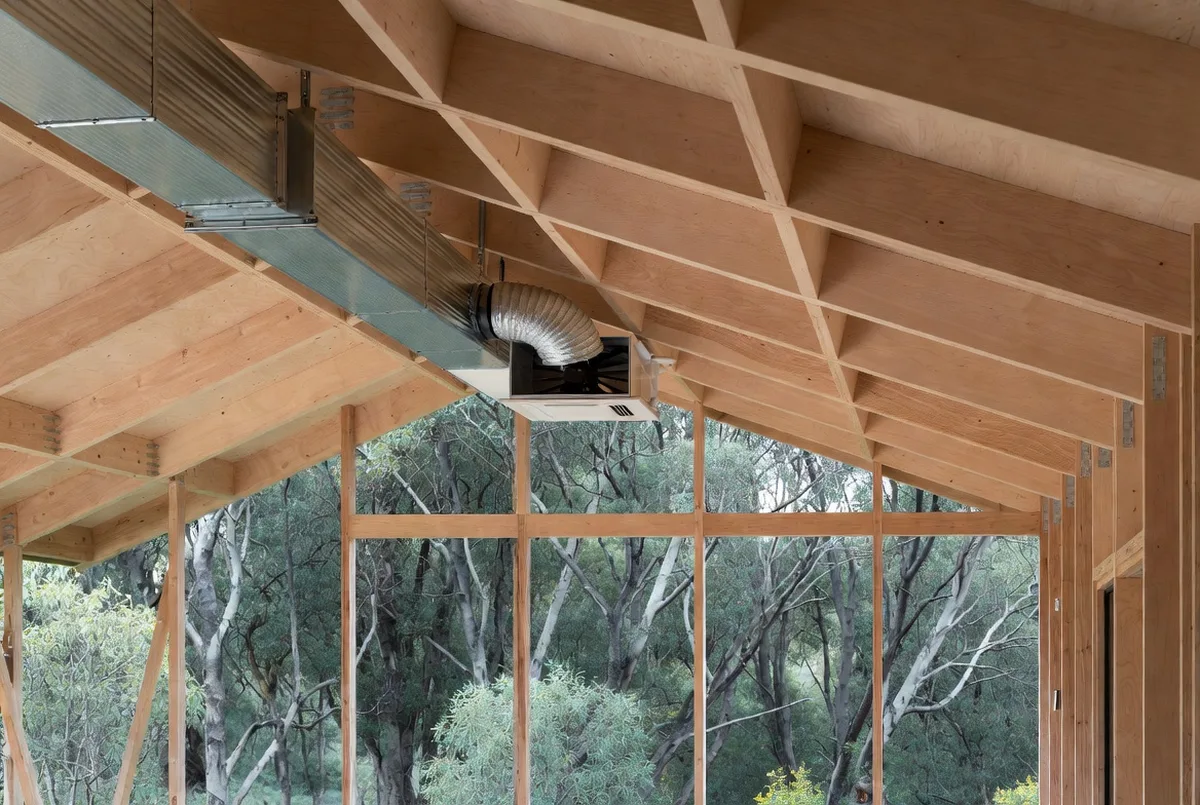
Mechanical ventilation with heat recovery, usually shortened to MVHR, continuously extracts stale, damp air from kitchens and bathrooms and supplies filtered fresh air to living and sleeping rooms, passing the two streams through a heat exchanger so the outgoing air warms the incoming air without the two mixing. Certified units recover the large majority of that heat, which is why you can ventilate a home continuously in winter without throwing away the warmth (PHINZ). It is not air conditioning and not a heating system; it is a ventilation system that stops ventilation being expensive. In an airtight home it is not optional, it is the other half of the design.
Key Questions Answered
What does MVHR actually do?
It continuously extracts stale, humid air from wet rooms and supplies filtered fresh air to living and bedroom spaces, recovering heat from the outgoing air into the incoming air through a heat exchanger.
Do the two air streams mix?
No. They pass on either side of a heat exchanger, so heat transfers but the airflows stay separate. You are not recirculating stale air around the house.
Is it a heating system?
No. It is a ventilation system that conserves heat you have already paid for. A high-performance home still needs a heat source, though usually a much smaller one than a leaky house would.
Is it the same as a positive pressure system?
No. Common positive-pressure units push roof-space air into the house without heat recovery and without balanced extraction. MVHR is balanced supply and extract with a heat exchanger, which is a different thing entirely.
What maintenance does it need?
Filter changes, essentially, on a schedule of months rather than weeks, plus occasional checks. It is minimal, but it is not zero, and neglecting filters is the main way people degrade their own system.
In This Guide
Key Takeaways
- MVHR extracts stale, humid air from wet rooms and supplies filtered fresh air to living and sleeping spaces, continuously.
- A heat exchanger transfers heat from outgoing to incoming air without the streams mixing, so ventilation stops being a heat penalty (PHINZ).
- It is not air conditioning and not heating; a high-performance home still needs a heat source, usually a small one.
- It differs fundamentally from common positive-pressure roof-air systems, which have no heat recovery and no balanced extraction.
- Maintenance is minimal but real: filters need changing on schedule for the system to keep performing.
What does MVHR actually do?
It moves air deliberately, and keeps the heat. A balanced system continuously extracts stale, humid air from the rooms that produce it, kitchen, bathrooms, laundry, and supplies filtered fresh air to the rooms where you live and sleep. On the way out, the stale air passes through a heat exchanger alongside the incoming air, giving up most of its warmth to it. The two streams never mix; only heat crosses between them.
The result is a house that is being ventilated all the time, quietly, without you opening anything, and without paying a heating penalty for it. Certified units recover the large majority of the heat in the outgoing air, which is what makes continuous winter ventilation affordable rather than wasteful (PHINZ).
What MVHR is not
Worth being blunt about, because the category is muddled in New Zealand. It is not air conditioning: it does not exist to cool the house. It is not a heating system: a high-performance home still needs a heat source, although usually a much smaller one than a leaky house of the same size. And it is not the same as the common positive-pressure systems that push roof-space air into a home, which have no heat recovery and no balanced extraction, and are a fundamentally different proposition.
| MVHR | Positive pressure roof-air | |
|---|---|---|
| Air source | Outdoors, filtered | Roof space |
| Extraction | Balanced, continuous from wet rooms | None; air pushed in only |
| Heat recovery | Yes, via heat exchanger | No |
| Winter effect | Fresh air, heat retained | Can push cold air in |
| Suits | Airtight, high-performance homes | Marketed for damp existing homes |
Both get called ventilation, which is where the confusion starts. They solve different problems to different standards.
Why does an airtight home need it?
Because once you have sealed the envelope, you have removed the accidental air exchange the house used to rely on, and you have to replace it with a deliberate one. That is not a drawback, it is the entire point: leakage ventilated the house hardest on cold windy nights and barely at all on still days, whereas a designed system delivers a steady, filtered supply regardless of the weather.
This is why the two are designed together and why buying one without the other disappoints. Seal without ventilating and the house gets stuffy and humid. Ventilate without sealing and you are recovering heat from one stream while more escapes uncontrolled around it. Our companion guide, airtightness and why it matters, covers the sealing half, and the pairing is one of the five Passive House principles.
What is it like to live with?
Mostly unnoticeable, which is the highest compliment you can pay a ventilation system. A correctly designed and commissioned unit is barely audible, the air does not feel draughty because it is introduced gently and at room temperature, and the house simply smells fresh. People generally notice the absence of things: no condensation on the windows in the morning, no stale bedroom, no cooking smells lingering through the house.
Where systems disappoint, the cause is almost always design or installation rather than the technology: undersized or badly routed ducting, a unit working harder than it should, or commissioning that was never properly done. It is a system that rewards being designed into the building from the start and punishes being squeezed in late, which is exactly the argument for having the builder and designer working together early.
What about maintenance and summer?
Maintenance is small but real: filters need changing on a schedule measured in months, and the unit deserves an occasional check. That is genuinely the bulk of it, and neglecting filters is the most common way owners quietly degrade their own system, since a clogged filter makes the unit work harder and move less air. Put it on a calendar and forget about it.
For summer, systems normally include a bypass: when the incoming air is already at a comfortable temperature there is no sense warming it further, so the air skips the heat exchanger. Worth knowing, though, that summer comfort is mostly won earlier, through orientation, shading and glazing decisions, rather than by the ventilation system. A well-shaded home with good ventilation is comfortable; a glass box with excellent ventilation still overheats.
What is the bottom line?
MVHR gives a sealed home continuous, filtered fresh air while keeping the heat you have paid for, by passing outgoing and incoming air across a heat exchanger without mixing them. It is not heating and not air conditioning, and it is not the same as a positive-pressure roof-air unit. In an airtight home it is not an upgrade, it is the other half of the design, and it is why a well-built high-performance house is fresher than a draughty one rather than stuffier.
Design it in early, commission it properly, change the filters, and it will quietly do its job for decades. If you are planning a high-performance home in Nelson Tasman, arrange a consultation and we will show you how the ventilation and the envelope get designed as one system.
Frequently Asked Questions
Why can’t I just open a window?
You can, and on a mild day it is lovely. The problem is winter and the middle of the night, when you will not open windows and the house most needs air exchanged. Relying on windows means ventilating when it is pleasant and not ventilating when it matters, which is how bedrooms end up stale and damp by morning.
Will it be noisy?
A well-designed and correctly commissioned system is barely audible in normal running. Noise complaints almost always trace to undersized ducting, poor layout or a unit running harder than it should, which are design and installation issues rather than inherent to the technology.
Does it use much power?
Very little, since it is fans rather than heating elements, and the heat it recovers substantially outweighs the electricity it uses to run. That balance is the entire point of recovering heat rather than simply extracting air.
What about summer?
Systems normally include a bypass so that when incoming air is already comfortable it skips the heat exchanger rather than warming the house further. Summer comfort also depends heavily on shading and glazing decisions made at design stage, which matter more than the ventilation system does.
Do I still need extract fans in the bathroom?
Generally not, because the MVHR is doing continuous extraction from those rooms by design, which handles moisture better than an intermittent fan someone has to remember to switch on. The specifics depend on the system design and the consent.
Is MVHR worth it in a normal, leaky house?
Less so, and this is the honest answer. In a leaky building you are recovering heat from air while more air escapes uncontrolled around it, so the benefit is diluted. MVHR pays off properly in a well-sealed home, which is why airtightness and ventilation are designed together rather than bought separately.
Research Report: MVHR in New Zealand Homes
Read Full ReportBalanced heat-recovery ventilation, category confusion, and design dependencies.
Planning a build in Nelson Tasman?
Talk to Ecotectural early and keep control of your design and budget from day one.
Arrange a consultation