

Choosing Window and Door Joinery: Aluminium, Timber and Thermally Broken
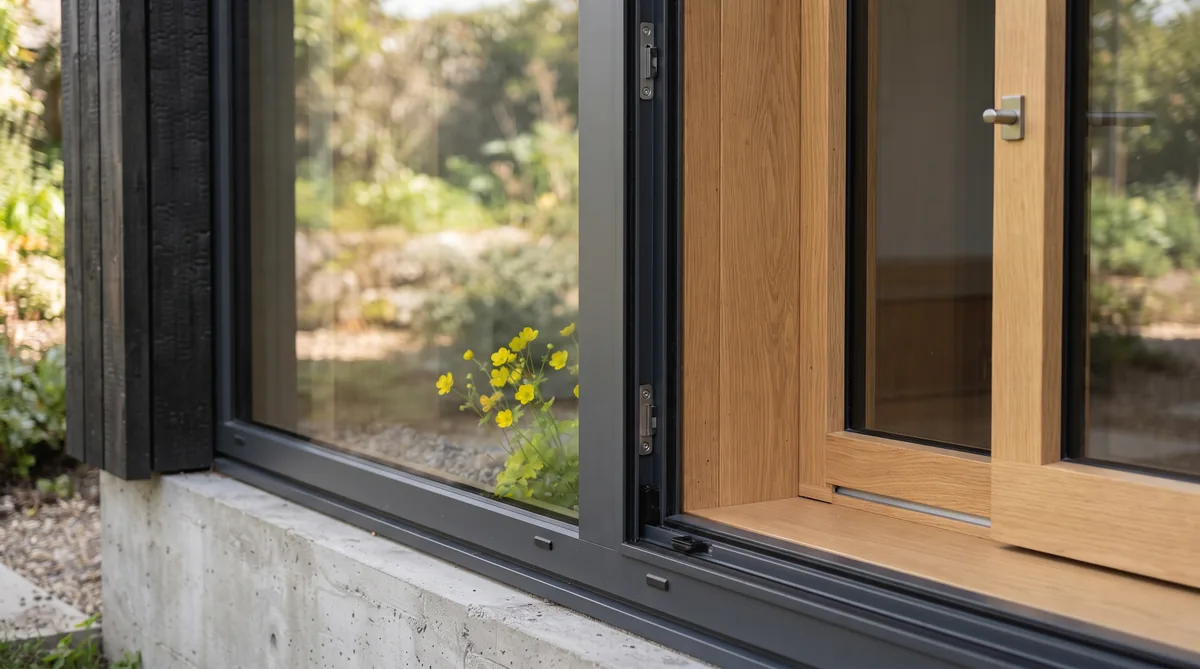
Window and door joinery is the frame that holds the glass, and it matters as much as the glazing because the frame is a large part of a window’s heat loss. A window is two decisions, not one: the glass, which is double or triple glazing, and the frame, which is standard aluminium, thermally broken aluminium, timber or a composite. A standard aluminium frame conducts heat and cold straight through the metal, which is why thermally broken aluminium, with an insulating barrier inside the frame, or timber and composite frames perform far better. The frame is chosen alongside the glazing specification and the orientation, so the whole window works as one system rather than a good pane let down by a cold frame.
Key Questions Answered
Why does the frame matter as much as the glass?
The frame is a big part of a window’s total heat loss, so a high-performance pane in a cold frame underperforms. BRANZ treats the frame and the glazing together as one whole-window result, which is why both are a decision.
What are the main joinery options?
Standard aluminium, thermally broken aluminium, and timber or composite. Standard aluminium is the cheapest and coldest, thermally broken aluminium adds an insulating barrier, and timber and composite frames insulate naturally while carrying the glazing you specify.
What is thermally broken joinery?
Aluminium joinery with a low-conductivity barrier set between the inside and outside faces of the frame, so heat and cold cannot pass straight through the metal. It reduces heat loss and the cold inner surface that causes condensation.
How does joinery affect comfort and condensation?
A cold frame chills the air beside it and its inner surface drops below the dew point, so moisture condenses on the frame and glass edges. A warmer, thermally broken or timber frame stays closer to room temperature and stays drier.
How is joinery chosen for a high-performance home?
The frame, the glazing and the orientation are specified together as one whole-window result, matched to each elevation. PHINZ modelling and BRANZ guidance treat the window as a system, not a pane and a frame chosen separately.
In This Guide
Key Takeaways
- A window is two decisions: the glass, which is double or triple glazing, and the frame, which is the joinery, and the frame is a large part of the window’s heat loss.
- Standard aluminium conducts heat and cold straight through the metal; thermally broken aluminium sets an insulating barrier inside the frame to stop that path.
- Timber and composite frames insulate naturally and reach high performance, at a higher cost and with more maintenance on exposed timber.
- A cold frame causes condensation and cold edges, because its inner surface drops below the dew point; a warmer frame stays drier and more comfortable, per BRANZ guidance.
- The frame is chosen alongside the glazing specification and orientation for a whole-window result, the way PHINZ modelling and Ecotectural’s Around One Table approach treat it.
Why does the window frame matter as much as the glass?
Because the frame is a large part of a window’s heat loss, not a neutral surround. A window is really two decisions, the glass and the frame, and a high-performance pane set in a cold frame is let down at its edges. BRANZ treats the frame and the glazing together as one whole-window result for exactly this reason.
It is easy to focus on the glass and forget the frame carries it, seals it and, in the wrong material, conducts heat straight out of the room. The pane, the double or triple glazing, is covered in our guide on double versus triple glazing. This article is about the other half of the decision, the joinery, and how the two are specified together so the window works as one system rather than a good pane undone by the frame around it.
What are the main joinery options?
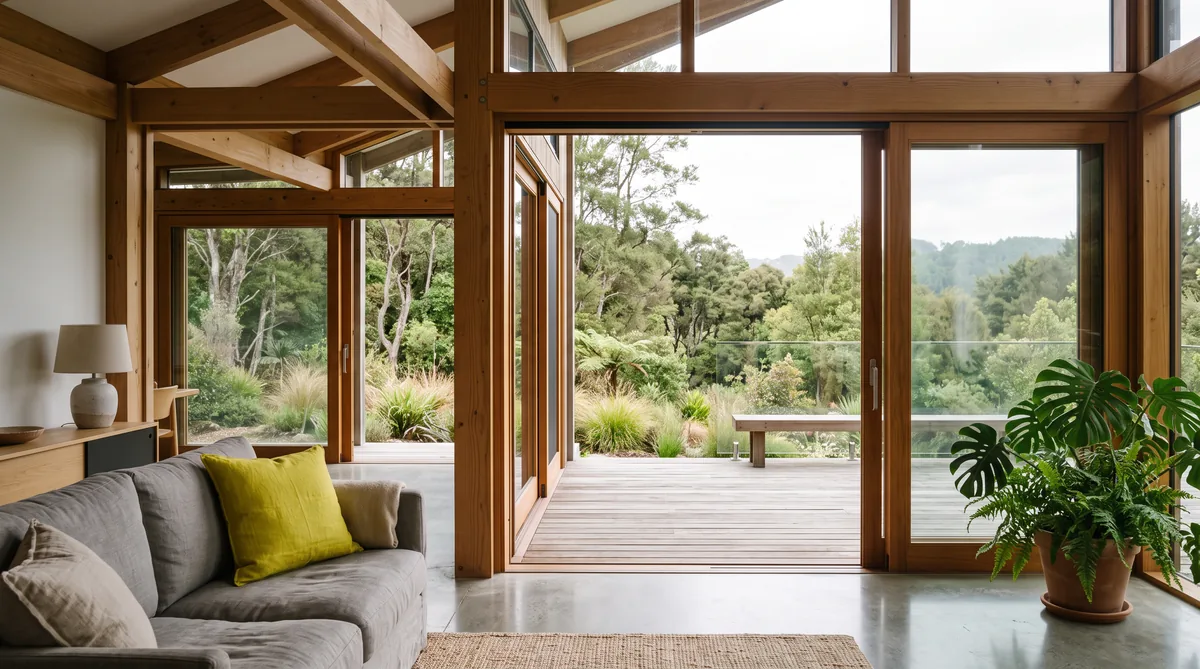
There are four you will meet in a New Zealand home: standard aluminium, thermally broken aluminium, timber, and composite or uPVC. They run from cheapest and coldest to warmer and dearer, and each carries the glazing you specify, so the choice is about how much heat the frame itself lets go.
Standard aluminium is the default in most volume housing because it is strong, slim and inexpensive, but bare aluminium is an excellent conductor, so the frame runs cold. Thermally broken aluminium keeps the same look and strength but adds an insulating barrier inside the frame. Timber insulates naturally and performs well without any break, at a higher cost and with maintenance on the exposed exterior. Composite frames pair a timber or insulated inner with a hard-wearing outer skin, and uPVC frames, common in Europe, insulate well but are less established here. The table sets the practical differences side by side.
| Joinery type | Performance | Note |
|---|---|---|
| Standard aluminium | Lowest; the metal conducts heat and cold straight through the frame | Cheapest and most common, but the coldest frame and the most prone to condensation |
| Thermally broken aluminium | Much improved; an insulating barrier stops the heat path through the frame | Keeps the slim aluminium look and strength, at a higher cost than standard |
| Timber or composite | Highest; timber insulates naturally and composites add a durable outer skin | Premium cost; exposed timber needs recoating, which a composite skin reduces |
Which one suits a given home depends on the performance you are after and where each window sits, which is why the frame is never chosen in isolation from the glazing and the orientation.
What is thermally broken joinery?
Thermally broken joinery is aluminium framing with a low-conductivity barrier set between the inside and outside faces of the frame, so the two are not in direct metal-to-metal contact. Heat cannot short-circuit through the metal, so the inner surface stays warmer and the frame loses far less heat.
The break itself is usually a strip of polyamide or similar material bonded into the frame during manufacture. Picture a standard aluminium frame as a single piece of metal running from the warm room to the cold outside air: whatever the glass does, the frame hands heat straight out and draws cold straight in. The thermal break interrupts that bridge. The result is a frame whose inner face sits closer to room temperature, which cuts heat loss and, just as importantly, keeps the surface above the point where moisture forms. It is the standard way to bring aluminium joinery, the material most New Zealand homes already use, up to a level that suits a warm, dry home, and it pairs naturally with the airtight, well-insulated approach we describe in our guide to airtightness and why it matters.
How does joinery affect comfort and condensation?
A cold frame chills the air beside it and its inner surface drops below the dew point, so moisture condenses on the frame and the glass edges. A warmer frame, thermally broken or timber, stays closer to room temperature, so it feels more comfortable to sit near and it stays dry.
Condensation is not a mystery or a fault in the house so much as physics: when a surface is colder than the dew point of the room air, water forms on it, the same way a cold drink beads in summer. BRANZ points to cold internal surfaces as a leading cause of the winter condensation and the damp, mouldy reveals many New Zealand homeowners know well, and standard aluminium frames are a common offender because they run so cold. The comfort side matters too. A cold frame and glass edge create a draught of chilled air that falls into the room, so you feel cold near a window even when the air temperature reads fine. Warmer joinery removes both problems at once, which is why the frame is a health and comfort decision, not only an energy one. Good ventilation still has its part to play alongside the joinery.
How is joinery chosen for a high-performance home?
The frame, the glazing and the orientation are specified together as one whole-window result, matched to each elevation rather than chosen off a single price. PHINZ modelling and BRANZ guidance both treat the window as a system, so the joinery is settled alongside the glass, not after it.
In practice that means a north elevation gathering winter sun is a different decision from a cold, shaded south face or an exposed coastal wall, and the frame and glass are matched to each. This is the kind of question that is cheap to solve on paper and expensive to fix once the joinery is ordered, so at Ecotectural it is settled early through the approach we call Around One Table, with the architect, an energy-literate engineer and, where it is useful, an energy consultant deciding it together. Orientation drives much of it, which is why we plan the glazing around the sun, as our guide to natural light and space in home design explains. The joinery specification then follows the light, the exposure and the performance target for the home, rather than being a late substitution to hit a number. You can see how that whole-of-home thinking runs through our design and build service.
What is the bottom line?
The frame matters as much as the glass, because it is a large part of a window’s heat loss. Standard aluminium is the coldest and most condensation-prone; thermally broken aluminium adds an insulating barrier inside the frame; timber and composite insulate naturally at a higher cost. Whichever you choose, the frame is specified alongside the glazing and the orientation so the whole window performs as one.
Getting this right is the difference between a window that feels warm and stays dry and one that streams with condensation on a cold Nelson morning. Ecotectural has designed and built architectural homes across Nelson Tasman since 2006, settling the joinery, the glazing and the orientation together at the concept stage rather than leaving them to a late choice. If you are planning a high-performance home, the best first step is to arrange a consultation before the window schedule is locked in.
Frequently Asked Questions
Is standard aluminium joinery a problem in a new home?
It is the weakest link in an otherwise good window. Aluminium is an excellent conductor, so a standard, non-broken frame carries heat and cold straight through the metal and its inner face runs cold. In a home aiming for comfort and low condensation, BRANZ guidance points to a thermally broken frame or timber instead, so the frame does not undo the glazing.
What exactly is a thermal break?
It is a strip of low-conductivity material, often a polyamide, set between the inside and outside faces of an aluminium frame so the two are not in direct metal-to-metal contact. Heat cannot short-circuit through the frame, so the inner surface stays warmer, heat loss drops and the frame is far less prone to condensation.
Are timber frames better than aluminium?
Timber insulates naturally, so a timber or composite frame performs well without a thermal break and can reach the levels PHINZ modelling looks for. The trade-offs are cost and maintenance, since exposed exterior timber needs recoating over the life of the home. A composite, timber inside with an aluminium or other weather skin outside, is a common way to get the performance with less upkeep.
Do I still need good glazing if the frame is thermally broken?
Yes. The frame and the glass are two separate decisions that together make one whole-window result. A warm frame around single or poor glazing still loses heat through the pane, and excellent glazing in a cold frame is let down at the edges. They are specified together, which is the subject of our guide on double versus triple glazing.
Why does my joinery drip with condensation in winter?
Because the inner surface of the frame or glass edge has dropped below the dew point of the room air, so moisture condenses on it, exactly as it does on a cold drink in summer. Standard aluminium frames are the usual culprit, running cold enough to stream. A thermally broken or timber frame, paired with good glazing and ventilation, keeps the surface warm enough to stay dry.
How does Ecotectural choose the joinery for a build?
The joinery is specified alongside the glazing and the orientation, elevation by elevation, so the whole window suits where it sits. Ecotectural has designed and built architectural homes across Nelson Tasman since 2006, settling these decisions early through an approach called Around One Table, with an energy-literate engineer and, where useful, an energy consultant at the table.
Research Report: Choosing Window and Door Joinery in New Zealand
Read Full ReportWhy the frame matters as much as the glass, the main joinery options, what a thermal break does, the effect on comfort and condensation, and how joinery is specified with the glazing.
Planning a build in Nelson Tasman?
Talk to Ecotectural early and keep control of your design and budget from day one.
Arrange a consultation