

The Design Brief: The Questions to Answer Before Anyone Draws a Plan
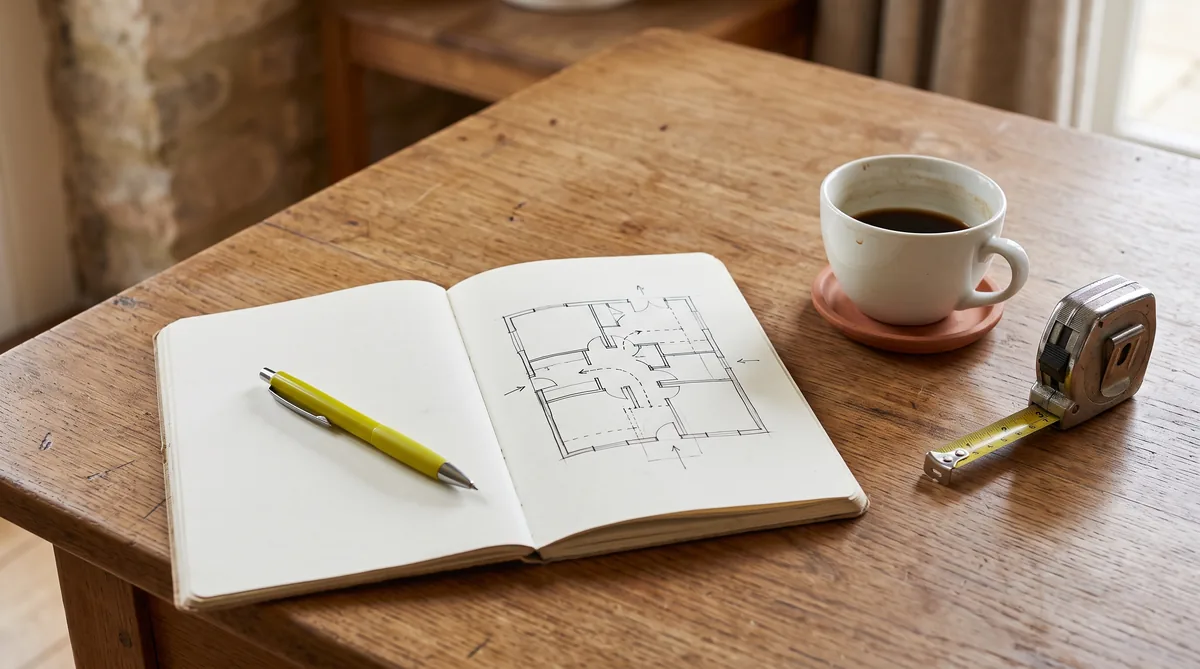
A design brief is the plain-language document that captures how you want to live, your site, your budget and your non-negotiables before design starts. It is not a plan or a drawing; it is the set of answers a designer needs before the first line goes on paper. A good brief works through daily routines, who lives in the home and how it grows, how you host, storage, future needs, the site and its orientation, an honest budget with a 10 percent contingency, and a realistic timeline. Solving those priorities on paper first is far cheaper than discovering them once the design is drawn.
Key Questions Answered
What is a design brief?
A plain-language document that captures how you want to live, your site, your budget and your non-negotiables before design starts. It is the set of answers a designer needs before drawing anything, not a plan itself.
What should the brief answer?
Your daily routines, who lives there and how that changes, how you host, storage, future needs, the site and its orientation, an honest budget with a 10 percent contingency, and a realistic timeline.
Why does it matter before drawing?
Priorities are cheap to resolve in words and expensive to resolve in built form. A clear brief means the design solves the right problems the first time, rather than being redrawn once you realise what you actually needed.
How does budget shape the brief?
An honest budget, stated up front with a 10 percent contingency, decides what the brief can realistically ask for. It turns a wish list into a set of priorities the design can actually deliver.
Who helps you write it?
You know how you want to live; a designer and builder help translate that into something buildable and affordable. At Ecotectural the whole team shapes the brief from the first concept, an approach we call Around One Table.
In This Guide
Key Takeaways
- A design brief captures how you want to live, your site, your budget and your non-negotiables before any plan is drawn; it is answers, not drawings.
- The real questions cover daily routines, who lives there and how that changes, hosting, storage, future needs, the site and its orientation, budget and timeline.
- Solving priorities on paper first is far cheaper than discovering them once the design is drawn, when changes are expensive.
- An honest budget, stated up front with a 10 percent contingency, turns a wish list into priorities the design can actually deliver.
- You bring the life you want to live; a designer and builder help make it buildable and affordable, shaping the brief together from the first concept.
What is a design brief?
A design brief is the plain-language document that captures how you want to live, your site, your budget and your non-negotiables before design starts. It is not a plan or a drawing. It is the set of answers a designer needs before the first line goes on paper.
Think of it as the difference between the question and the answer. The plan is one possible answer; the brief is the question it responds to. Get the brief right and every drawing that follows is aimed at the life you actually want to live. Skip it, or leave it vague, and the design becomes guesswork that gets corrected slowly and expensively later. For how the brief then feeds into the wider process, see our guide on how a home is designed in New Zealand.
What questions should your design brief answer?
A good brief works through how you live, the site, the budget, your non-negotiables and the timeline. The aim is to turn a loose sense of what you want into clear, honest answers a designer can act on, rather than a wish list of features.
Start with daily routines. Where does the morning happen, where does the day end, how does the household move through the house. Then who lives there, and how that changes: children arriving or leaving, parents moving in, working from home, ageing in place. How you host matters too, whether that is quiet dinners for two or a full house at Christmas. Be specific about storage, which is the thing most people under-plan and later regret. Name your future needs plainly, so the home suits the next twenty years and not just the first. And bring the site into it early, because its slope, aspect and outlook shape what is possible. Our guide on reading your building site covers what to look for. The table below sets out what to capture under each heading.
| Brief topic | What to capture |
|---|---|
| How you live | Daily routines, who lives there and how that changes, how you host, storage you actually need, and the future needs the home must grow into |
| The site | Slope, aspect and orientation, sun and shade through the seasons, outlook, access, and any constraints the land places on the design |
| Budget | An honest total figure, stated up front, with a 10 percent contingency built in and a clear sense of where you will and will not spend |
| Non-negotiables | The handful of things that are not up for compromise, separated clearly from the nice-to-haves so the design can prioritise |
| Timeline | When you need to be in, any fixed dates driving that, and how much flexibility there is around design, consent and construction |
Why does the brief matter before any drawing?
The brief matters because priorities are cheap to resolve in words and expensive to resolve in built form. A clear brief means the design solves the right problems the first time, instead of being redrawn once you realise what you actually needed.
This is the same logic that runs through good building generally. A change made in a conversation costs nothing. The same change made to a developed design costs a redraw. Made on site, it costs materials, labour and time. When your brief is honest about what matters, the designer aims at it from the start, and the drawings converge instead of wandering. A vague brief does the opposite: it produces a design that looks reasonable but quietly misses how you live, and the correction arrives later when it hurts most. Deciding these things before you commit to a route is part of getting the sequence right, which our guide on where to start when building a house lays out.
How does an honest budget shape the brief?
An honest budget, stated up front with a 10 percent contingency, decides what the brief can realistically ask for. It is the difference between a wish list and a set of priorities the design can actually deliver, because every choice in the brief is made against a real number rather than a hope.
A budget you are not honest about does not disappear; it simply arrives later as disappointment, when the design has to be cut back to fit. Far better to name the figure at the start and build the brief around it. We add a 10 percent contingency as a matter of course, on the plain logic that if you cannot afford the contingency, you cannot afford to build. Most of our builds start around one million dollars, which is a filter for the level of home we work on rather than a price on a page. A frank budget also lets the brief say where the money should go, so the non-negotiables are funded and the nice-to-haves give way if they need to. That is far easier to decide in words than to unpick from a drawing.
Who helps you write the brief?
You bring the most important part, which is how you want to live. A designer and builder help translate that into something buildable and affordable. The best briefs come from that conversation, not from a homeowner filling in a form alone, because the give and take is where real priorities surface.
This is where engaging the builder early pays off. A designer shapes how the home works and feels; a builder brings buildability and real cost to the same table, so the brief stays grounded in what can actually be built for the budget. At Ecotectural we shape the brief this way from the first concept, an approach we call Around One Table: the right architect, an energy-literate engineer and, where it is useful, an energy consultant, working with you and the builder together rather than in sequence. You can see how that runs across a whole project on our design and build page.
What is the bottom line?
A design brief captures how you want to live, your site, your budget and your non-negotiables before any plan is drawn. It is the set of honest answers a designer needs first, and getting it right means the design solves the right problems the first time, while the changes are still cheap.
The work of the brief is deciding what matters before anyone commits it to paper, which is why a designer and builder are best brought in while it is still forming. Ecotectural has designed and built architectural homes across Nelson Tasman since 2006, shaping the brief with clients from the first concept using an approach we call Around One Table. If you are thinking about building, the best first step is to arrange a consultation before a single plan is drawn.
Frequently Asked Questions
Is a design brief the same as a plan?
No. A plan is a drawing of the building; a brief is the set of answers behind it. The brief says how you want to live, what the site allows, what the budget is and what you will not compromise on. The plan is one possible response to that brief.
How long should a design brief be?
Long enough to be honest, not so long it becomes a wish list. What matters is clarity, not length. A brief that plainly states your priorities, your budget and your non-negotiables is worth more than pages of general preferences a designer cannot act on.
Do I need the site sorted before writing the brief?
The site shapes the brief heavily, so the more you know about it the better. Its slope, aspect and outlook decide a great deal about how a home can sit and work. Our guide on reading your building site covers what to look for before you commit.
What if I do not know my budget yet?
Then that is the first thing to settle, because the budget decides what the brief can realistically ask for. State a real figure and add a 10 percent contingency. If you cannot afford the contingency, you cannot afford to build, and it is better to know that before design starts.
Should the builder be involved in the brief?
Yes. A builder brings buildability and real cost to the conversation early, so the brief stays grounded in what can actually be built and afforded. Engaging the builder while the brief is still forming is one of the advantages of a design and build approach.
Does Ecotectural help write the brief?
Yes. We shape the brief with you from the first concept, using an approach we call Around One Table, where the right architect, an energy-literate engineer and, where useful, an energy consultant work with you and the builder together before any plan is drawn.
Research Report: The Design Brief in New Zealand
Read Full ReportWhat a design brief is, the questions it should answer, why it comes before any drawing, how an honest budget shapes it and who should help write it.
Planning a build in Nelson Tasman?
Talk to Ecotectural early and keep control of your design and budget from day one.
Arrange a consultation