

Construction Loans and Progress Payments Explained
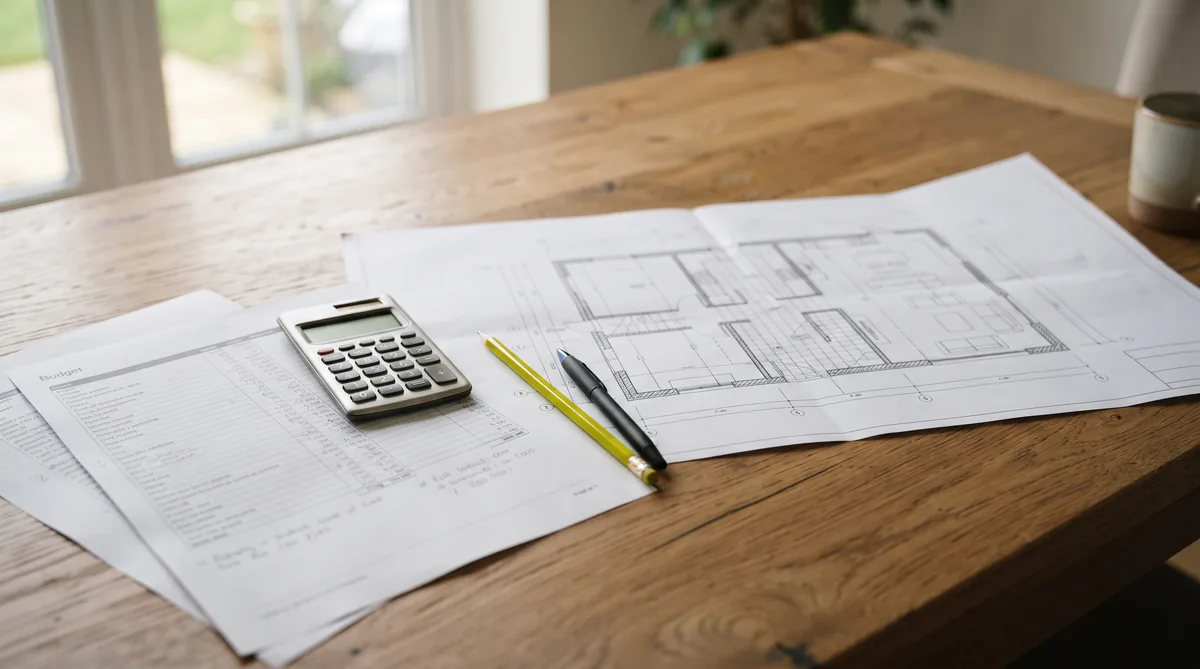
A construction loan is a home loan that releases money in stages as your build progresses, rather than as a single lump sum on day one. The bank pays out against work that is actually complete, usually confirmed by a valuation or a quantity surveyor check, so each release lines up with a stage of the build. You pay interest only on the balance drawn so far, which keeps costs down early and rises as the home takes shape. The stages typically run from deposit and foundations through closed-in and fit-out to completion, and open-book progress claims make each drawdown easy to match to real work on site.
Key Questions Answered
What is a construction loan?
A home loan that is released progressively as your build reaches agreed stages, rather than paid out in full at settlement. The bank drips funds against completed work, so you draw and pay interest only on what you actually need as the home is built.
How do progress payments work?
At each stage the builder issues a progress claim for work done. The bank confirms the work, often with a valuation or quantity surveyor inspection, then releases that portion of the loan. Interest applies only to the balance drawn so far.
What are the typical stages?
Deposit, then foundations, closed-in (the home weathertight), fit-out (linings, kitchen, services) and completion. The exact split follows your contract, but each drawdown matches a clearly defined stage of the build.
How does open-book pricing help?
Open-book progress claims show the real cost of the work completed at each stage, so a bank valuer or quantity surveyor can match the claim to the build easily. That reduces friction and delays at each drawdown.
What should I set up early?
Talk to your bank before you commit, allow a 10 percent contingency, and understand how retentions and the drawdown schedule work. Getting the loan structure agreed early keeps each stage moving without a cash gap.
In This Guide
Key Takeaways
- A construction loan releases funds progressively against completed work, unlike a standard mortgage that pays out in a single lump sum at settlement.
- Each drawdown is usually confirmed by a valuation or a quantity surveyor check, so the bank pays for work that is genuinely done.
- You pay interest only on the balance drawn so far, so costs start low and rise as the build advances through its stages.
- Open-book progress claims, a promise Ecotectural calls Built in the Open, line up cleanly with bank drawdowns and reduce friction at each release.
- Talk to your bank early, allow a 10 percent contingency, and understand retentions before you sign, so the loan structure supports the build rather than holding it up.
What is a construction loan?
A construction loan is a home loan that releases money in stages as your build progresses, rather than as a single lump sum on day one. The bank pays out against work that is actually complete, so what you owe grows in step with the home taking shape, not before.
That is the key difference from a standard mortgage. When you buy an existing house, the lender settles the full amount at once, because the whole asset already exists. A new build does not exist yet, so a construction loan funds it progressively, drawing down at agreed points and charging interest only on the balance drawn so far. Early on, when only the deposit and foundations are funded, the interest cost is low; it rises as each later stage is released. If you are still weighing up how to fund the whole project, our broader guide to financing a new build sets the loan in context alongside deposits, equity and cashflow.
How do progress payments work?
Progress payments, or drawdowns, work in a simple loop. At each stage the builder issues a progress claim for the work completed, the bank confirms that work is genuinely done, usually with a valuation or a quantity surveyor inspection, and then releases that portion of the loan to pay the claim.
That independent check is there to protect both you and the bank, so funds are only released against real work on site rather than against a promise. It also means the paperwork matters: a claim that clearly ties to defined, completed work is verified quickly, while a vague or lump claim can stall while the valuer seeks more detail. Interest is charged only on the running balance you have drawn, so your holding costs climb gradually through the build rather than landing in full at the start. Because a drawdown depends on a stage being finished and signed off, keeping the build programme and the claim schedule aligned is what keeps cash flowing without a gap.

What are the typical drawdown stages?
Most construction loans release funds across a handful of clearly defined stages: a deposit, then foundations, closed-in when the home is weathertight, fit-out, and completion. The exact split follows your building contract, but each drawdown matches a stage anyone can point to on site.
Thinking in these stages helps you picture both the build and the cashflow behind it. The table below sets out the four main construction drawdowns, what each one typically covers, and a note on what to watch. A deposit is usually taken before these, and a retention is commonly held at or after completion.
| Drawdown stage | What it covers | Note |
|---|---|---|
| Foundations | Site works, footings, slab or subfloor and the groundwork the home sits on | The first major draw after any deposit; ground conditions can add cost, which is where your contingency earns its place |
| Closed-in | Framing, roof, exterior cladding and windows, so the home is weathertight | A key milestone for the bank, as the structure is now clearly valuable and easy to verify |
| Fit-out | Insulation, linings, services, kitchen, bathrooms and interior joinery | Often the largest combined spend; open-book claims keep this detailed stage transparent |
| Completion | Finishing, final services, sign-off and handover | A retention is commonly held here and released once any minor items are put right |
The number and naming of stages can vary between contracts and lenders, so read your own drawdown schedule closely rather than assuming a standard set. Getting the sequence clear before you start is part of knowing where to start when building a house.
How does open-book pricing fit a construction loan?
Open-book pricing fits a construction loan almost perfectly, because both work stage by stage against real, itemised cost. When a progress claim shows the actual cost of the work completed at that stage, a bank valuer or quantity surveyor can match the claim to what is on site quickly, which reduces friction and delay at each drawdown.
A lump-sum claim asks the bank to take a single figure on trust; an open-book claim shows the working. Ecotectural prices this way as a matter of course, a promise we call Built in the Open, with the builder’s margin set at a flat 15 percent, agreed openly up front rather than hidden inside a total. In practice that means each stage the bank funds is the stage you can see, itemised, so there is less back-and-forth when a valuer checks the work. Value management runs through the whole build rather than as a one-off at the start, so cost stays visible right through to the final drawdown. Our explainer on how open-book pricing works goes into the mechanics, and the way deposits, retentions and GST sit within a build helps you read each claim in full.
What should you set up with your bank early?
Talk to your bank before you commit to a build, not after. Agreeing the loan structure early, the drawdown schedule, how stages are verified, and how a contingency is handled, is what keeps each stage moving without a cash gap you have to cover yourself.
Three things are worth settling up front. First, build in a 10 percent contingency and make sure the bank has it factored in, on the plain logic that if you cannot afford the contingency, you cannot afford to build; an unforeseen cost should not stall a drawdown. Second, understand retentions: a small percentage of a claim is commonly held back and released once minor items are put right, so plan your cashflow around when that money actually arrives. Third, confirm how each stage is signed off and how quickly the bank turns a verified claim into a payment, because a slow drawdown can hold up the next stage on site. A builder who prices open-book and issues clear, staged claims makes all of this easier for your lender, which is part of how we work on our design and build page.
What is the bottom line?
A construction loan funds your new home in stages, releasing money against completed work rather than in a single lump sum, with interest charged only on the balance drawn so far. The drawdowns typically run from deposit and foundations through closed-in and fit-out to completion, each confirmed by a valuation or quantity surveyor check, so the bank pays for work that is genuinely done.
The smoother the claims, the smoother the build. Open-book progress claims line up cleanly with bank drawdowns and reduce friction at each release, which is why Ecotectural has priced this way across Nelson Tasman since 2006, a promise we call Built in the Open. If you are planning a build and want the loan and the construction programme to work together from the start, the best first step is to arrange a consultation before anything is locked in.
Frequently Asked Questions
How is a construction loan different from a normal mortgage?
A normal mortgage hands over the full amount at settlement, which suits buying an existing home. A construction loan releases money in stages as the build reaches agreed points, so you only draw, and pay interest on, what the build has actually reached. It is the standard way banks fund a new build in New Zealand.
Do I pay interest on the whole loan from day one?
No. With a construction loan you pay interest only on the balance drawn so far. Early on, when only the deposit and foundations are funded, interest is low. It rises as each stage is released, which is one reason a progressive loan is more cost-efficient than borrowing the full sum up front.
Who checks the work before the bank releases funds?
The bank typically arranges a valuation or a quantity surveyor inspection at each stage to confirm the work claimed is complete before releasing that portion of the loan. This protects both you and the bank, and it is another reason open-book progress claims help, because the paperwork matches what is on site.
What is a retention?
A retention is a small percentage of a progress claim held back for a set period after a stage or after completion, released once any minor items are put right. It is a normal part of building contracts. Understanding how and when retentions are released helps you plan cashflow across the build.
Why does a contingency matter with a construction loan?
A build almost always meets something unforeseen, so a 10 percent contingency is standard, on the plain logic that if you cannot afford the contingency, you cannot afford to build. Agreeing the contingency with your bank up front means an unexpected cost does not stall a drawdown or leave a gap you have to cover yourself.
Does Ecotectural help with the drawdown and progress-claim process?
Yes. Ecotectural has built architectural homes across Nelson Tasman since 2006 and prices open-book, a promise we call Built in the Open, so each progress claim is transparent and easy for your bank to verify. We are glad to work in with your lender’s drawdown schedule from the start.
Research Report: Construction Loans and Progress Payments in New Zealand
Read Full ReportHow a construction loan differs from a standard mortgage, how progress payments and drawdown stages work, and how open-book claims reduce friction.
Planning a build in Nelson Tasman?
Talk to Ecotectural early and keep control of your design and budget from day one.
Arrange a consultation