

Why You Should Engage a Builder Before an Architect
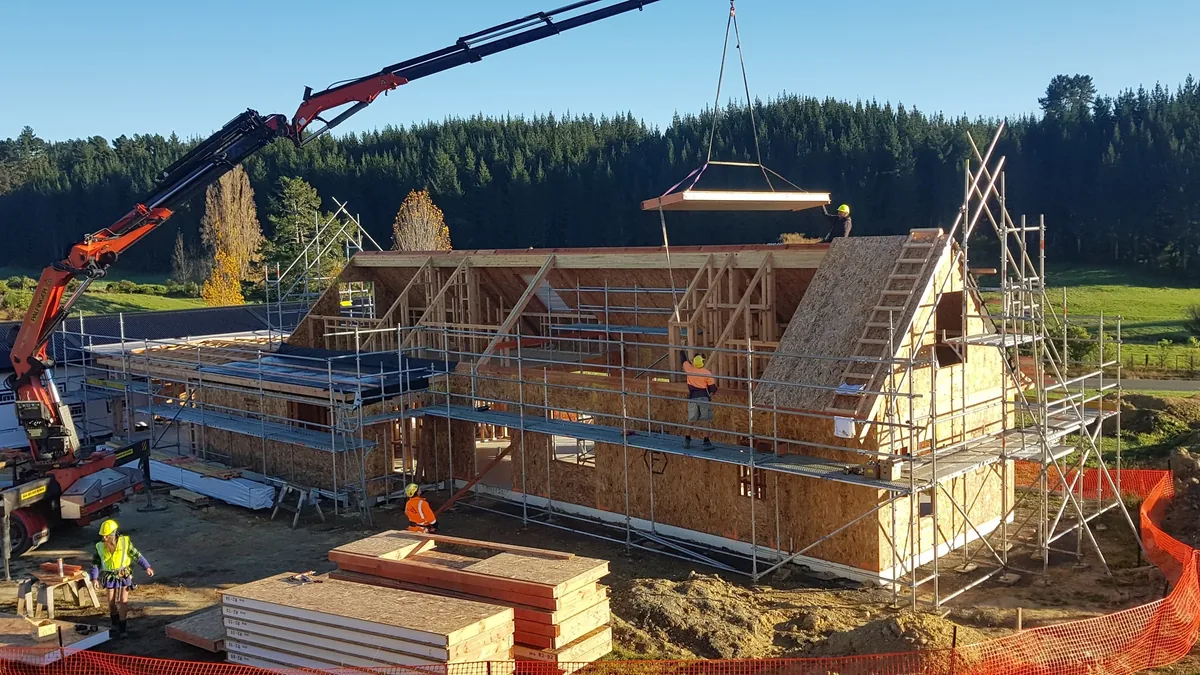
Engage a builder before you finalise an architect. When the builder is at the table from the first sketch, the design is costed as it develops, so it stays buildable and on budget. The common alternative, hiring an architect first and tendering the finished design to builders, often comes back over budget and forces expensive redesigns. Bringing the builder in early is the single biggest thing you can do to keep control of both your design and your money.
Key Questions Answered
Should I hire a builder or an architect first?
Engage the builder first, or both together. Early builder involvement means the design is cost-checked as it is drawn, so you avoid designing something you cannot afford to build (Mullen Building).
What is the over-budget tender trap?
It is when an architect designs in isolation, the design is tendered to builders, and the quotes come back over budget, forcing redesigns that waste design fees and time (NB Architects).
Does engaging a builder first limit my design?
No. A good builder collaborates with your architect rather than replacing them. You still get bespoke design, but every decision is tested for buildability and cost as it is made.
Who should I actually contact first?
A builder who offers design and build, or one who will sit at the table with your chosen architect and engineer from the start, is the safest first call for a high-end home (building.govt.nz).
In This Guide
- Should you hire a builder or an architect first?
- What is the over-budget tender trap?
- How does early builder involvement protect your budget?
- Does engaging a builder first limit your design?
- How do builder-first and architect-first compare?
- How does the one-team model work in practice?
- What is the bottom line?
Key Takeaways
- Early builder involvement is the single biggest lever for keeping a build on budget (Mullen Building).
- The over-budget tender trap, designing first then pricing, routinely forces costly redesigns and wasted design fees (NB Architects).
- A builder-first or one-team model costs the design as it develops, so the home stays buildable and affordable throughout.
- Engaging a builder early does not cost you design freedom; it protects your design intent by making it buildable.
- For a bespoke architectural home, the safest sequence is builder and architect collaborating from the first sketch, not in series.
Should you hire a builder or an architect first?
Engage the builder first, or engage the builder and architect together. The instinct is to start with an architect, design your dream home, then find someone to build it. For a high-end home, that sequence is where budgets go wrong.
When a builder is involved from the first sketch, the design is costed as it develops. You find out what things cost while the drawings are still easy to change, not after months of design work. Most building advice now points the same way: involve an experienced builder early, because the biggest reason to do so is budget management (Mullen Building). The official guidance also stresses choosing the right people for your project at the start, before the design is locked in (building.govt.nz).
What is the over-budget tender trap?
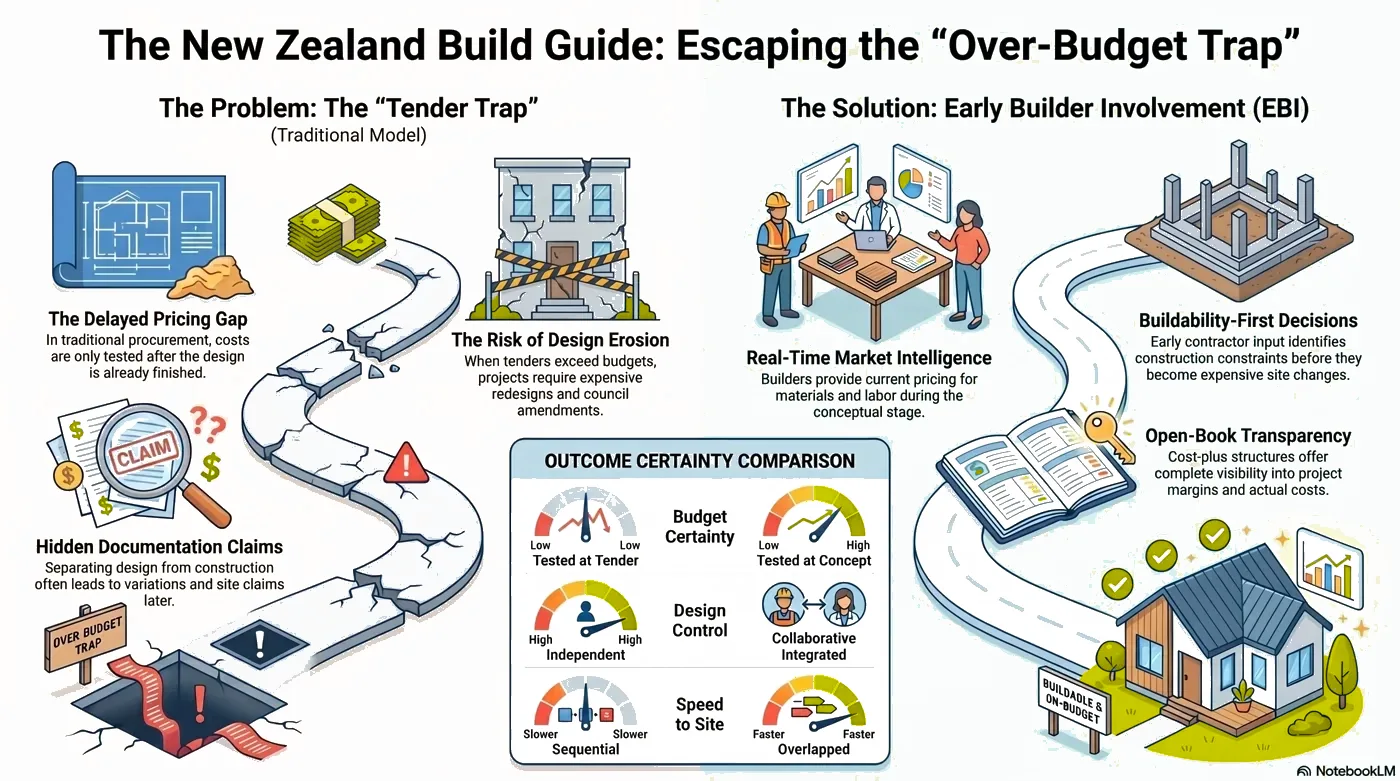
The over-budget tender trap is the most expensive mistake in custom building. It works like this: you hire an architect, develop a full design in isolation, then send it out to builders to price. The quotes come back well over your budget.
Now you are stuck. You have spent significant design fees, and the only way forward is to redesign, which costs more time and money and often removes the very features that made the home special. As NB Architects put it, hiring an architect first and then tendering to builders typically results in design revisions when the quotes come back over budget, wasting design fees (NB Architects). The trap is not bad design or bad building. It is the sequence: designing before anyone has priced it.
How does early builder involvement protect your budget?
A builder at the table early turns budget from a surprise at the end into a constraint you design within from the start. Every significant decision is tested against the budget while it is still cheap to change.
The builder flags cost pressures and buildability issues on paper, not on site. Material choices, structural approach and detailing are optimised against your number as the design develops. You see the cost of an idea before you fall in love with it. That is how a home lands on budget without value being stripped out at the last minute, and it is why early involvement is widely described as the single most effective budget protection a homeowner has (Mullen Building).
Does engaging a builder first limit your design?
No. This is the most common worry, and it has the logic backwards. Engaging a builder early does not replace your architect or flatten your design. It protects your design by making sure it can actually be built for what you want to spend.
In a collaborative model the architect still leads the design and the builder contributes buildability and cost intelligence. You keep bespoke, site-responsive architecture. What you lose is the risk of designing something beautiful that has to be gutted at tender. The result is usually a better home, because constraints are known early and the team solves for them together rather than in conflict.
How do builder-first and architect-first compare?
The table below sets the two sequences side by side. The difference is not the quality of the people, it is when the budget meets the design.
| Factor | Architect-first (design then tender) | Builder-first / one team |
|---|---|---|
| When budget is tested | At the end, when builders price it | Continuously, as the design develops |
| Risk of redesign | High (the over-budget tender trap) | Low |
| Design fees at risk | Significant if quotes come back high | Protected |
| Buildability | Checked late | Checked from the first sketch |
| Accountability | Split between architect and builder | Single, coordinated team |
| Design freedom | High, but exposed to budget shock | High, and protected by early costing |
Architect-first can work when the budget is generous and flexible. For most people building a once-in-a-lifetime home, builder-first keeps control where it belongs.
How does the one-team model work in practice?
In practice it means everyone is in the room from the start. Ecotectural sits the homeowner, architect, engineer and key trades at the same table from the outset, so the design, the engineering and the cost develop together rather than in sequence.
The builder coordinates the whole process and carries a single point of accountability, the architect leads and protects the design, and the homeowner makes decisions with real cost information in front of them. Combined with open-book pricing and complete project management, it means no impractical drawings that cause expensive changes later, and no surprises. Just collaborative design and build that keeps the project on time and on budget while protecting your vision.
What is the bottom line?
Engage a builder before you finalise an architect, or engage them together. Designing in isolation and pricing later is the over-budget tender trap, and it routinely costs homeowners time, design fees and the best parts of their design (NB Architects). Bringing the builder in early costs the design as it develops, keeps it buildable, and protects both your vision and your budget (Mullen Building).
For a bespoke home in Nelson Tasman, the safest sequence is one team from the first sketch, with the builder engaged early and the architect leading the design. If you are starting to think about a build, the best first step is to arrange a consultation before the design is locked in.
Frequently Asked Questions
Is it normal to talk to a builder before an architect in NZ?
It is increasingly common for high-end and design-and-build projects. Bringing a builder in early gives you real cost feedback while the design is still flexible, which is much harder once a full design is complete (building.govt.nz).
Will the architect mind if I involve a builder early?
A good architect welcomes it. Early collaboration between architect, builder and engineer produces a better, more buildable home and fewer nasty surprises at tender. The builder coordinates, the architect protects the design intent.
What is the risk of designing first and pricing later?
You can spend months and significant design fees on a home that comes back over budget when builders price it. The redesign that follows wastes time and money, and often strips out the features that made the design special (NB Architects).
How does early builder involvement save money?
The builder flags cost pressures and buildability issues while changes are still cheap, on paper rather than on site. Material choices, structure and detailing are optimised against the budget as the design develops, not after.
Does this mean I do not need an architect?
No. For a bespoke architectural home you still want architectural design. The point is sequence and collaboration: bring the builder in early so design and budget move together, with the architect still leading the design.
How does Ecotectural work with architects?
Ecotectural is engaged from the outset and sits the homeowner, architect, engineer and key trades at the same table from the start. The team coordinates every detail so the design is buildable, costed and exactly as imagined, with one point of accountability.
Research Report: Construction Strategy & Choosing Your Professionals (NZ)
Read Full ReportProcurement pathways, pricing transparency and why early professional involvement protects the budget.
How Ecotectural Can Help
Services and systems related to this guide
Planning a build in Nelson Tasman?
Talk to Ecotectural early and keep control of your design and budget from day one.
Arrange a consultation