

Why So Many NZ Homes Are Cold and Damp, and How to Fix It in a New Build
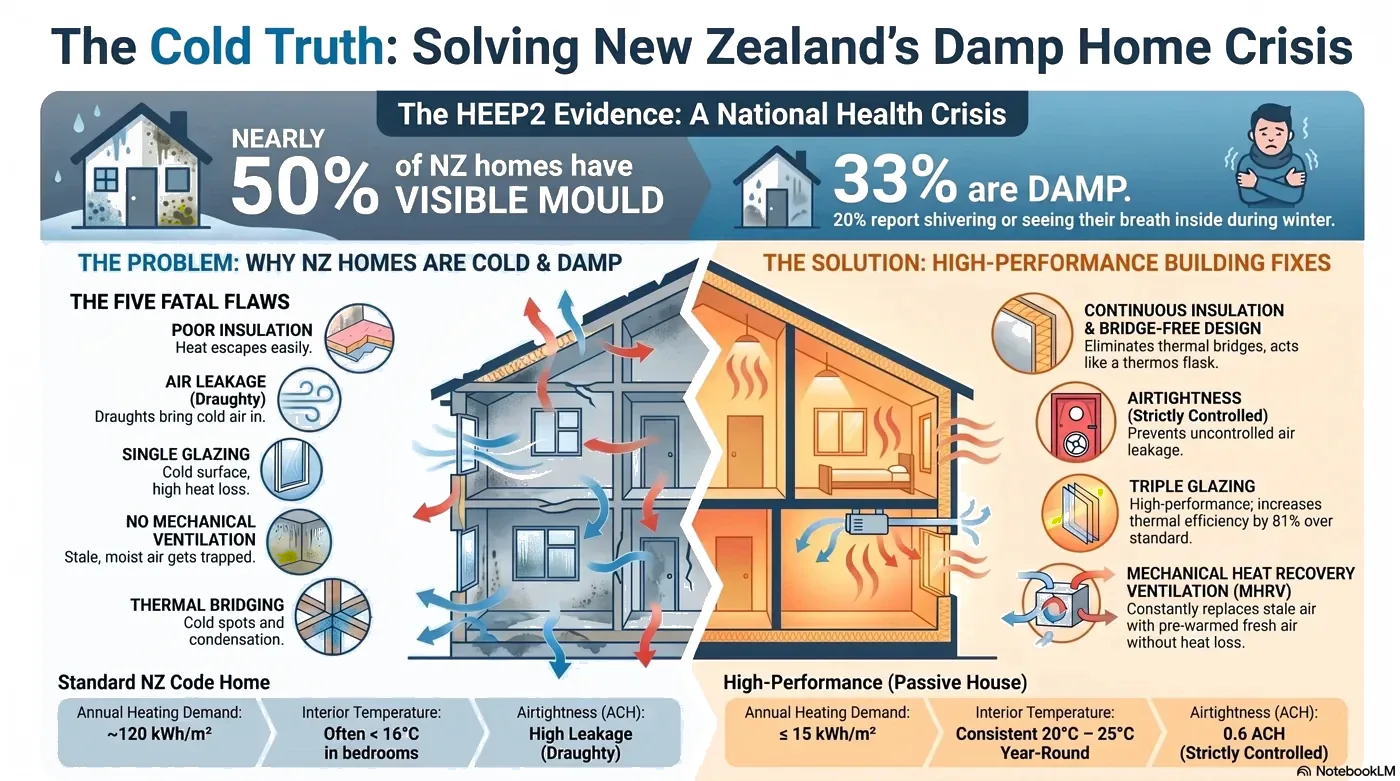
New Zealand homes are often cold and damp because most are built to a Building Code minimum that the SuperHome Movement notes sits well behind comparable countries. Too little insulation, a leaky envelope, low-spec glazing, no controlled ventilation and thermal bridges combine to lose heat and trap moisture. BRANZ HEEP2 research found about half of NZ homes had visible mould and about a third were damp at least some of the time (Sustainable Engineering). The fix in a new build is building science, not gadgets: continuous insulation, airtight construction, high-performance glazing and mechanical ventilation with heat recovery, designed in from the start.
Key Questions Answered
Why are NZ homes so cold and damp?
Most are built to the Building Code minimum, which is low by international standards (SuperHome Movement). Thin insulation, air leakage, poor glazing and no controlled ventilation let heat escape and trap moisture, so homes run cold and damp.
How common is the problem?
Very common. BRANZ HEEP2 research across more than 750 households found about 50 percent had visible mould and about a third were damp at least some of the time (Sustainable Engineering). About 28,000 NZ homes are always damp with visible mould (Stuff).
Do new builds avoid the problem?
Not automatically. A home built only to the Code minimum can still be cold and prone to condensation. Being new does not guarantee a warm, dry home; how it is designed and built does.
How do you fix it in a new build?
With building science: continuous insulation, an airtight envelope, high-performance glazing and mechanical ventilation with heat recovery. Together they hold heat in and move moisture out, the same principles behind a Passive House.
Is dampness just a heating problem?
No. Damp and mould come from moisture with nowhere to go meeting cold surfaces. Heating helps, but the real fix is insulation, airtightness and ventilation that keep surfaces warm and remove moist air.
In This Guide
Key Takeaways
- New Zealand’s Building Code is a legal minimum that the SuperHome Movement notes sits well behind comparable countries, so building to Code alone often means a cold home.
- BRANZ HEEP2 research found about 50 percent of NZ homes had visible mould and about a third were damp at least some of the time (Sustainable Engineering).
- About 28,000 New Zealand homes are always damp and always have visible mould (Stuff).
- Being a new build does not guarantee a warm, dry home; condensation depends on insulation, airtightness, glazing and ventilation, not age.
- The fix is building science designed in from the start: continuous insulation, airtightness, high-performance glazing and mechanical ventilation with heat recovery.
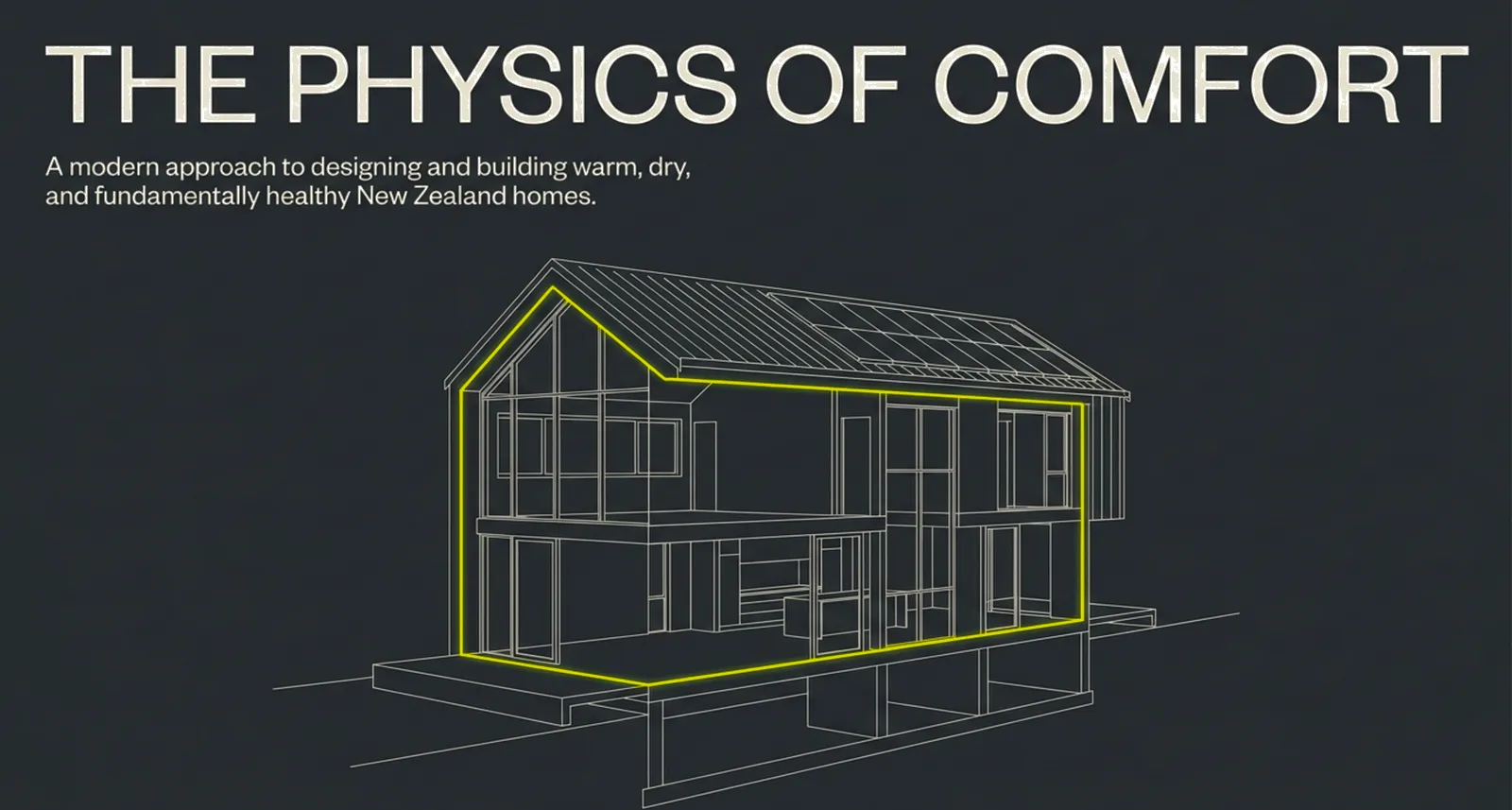
Why are so many New Zealand homes cold and damp?
Most New Zealand homes are cold and damp because they are built to the Building Code minimum, which the SuperHome Movement notes sits well behind comparable countries. The Code is a legal floor, not a target for comfort, so a home built to it alone loses heat quickly and struggles to stay dry.
This is not a weather problem or a heating-habits problem. It is a building problem. Thin insulation, a leaky envelope, low-spec glazing, no controlled ventilation and thermal bridges all work together to let heat out and trap moisture in. The good news is that everything on that list is a design and construction choice, which means a new home can be built to avoid all of it.
What does the evidence actually say?
The scale of the problem is well documented. BRANZ HEEP2 research, covering more than 750 households, found about half of New Zealand homes had visible mould, about one in five people reported seeing their breath indoors and shivering in winter, and about a third said their home was damp at least some of the time (Sustainable Engineering).
It gets starker. About 28,000 New Zealand homes are always damp and always have visible mould (Stuff). Average night-time bedroom temperatures have crept up to around 16.1 degrees over twenty years, but that is still below the level recommended for healthy sleep, especially for children and older people (Sustainable Engineering). The paradox in the data is that most people still consider their home healthy, which suggests cold and damp have been normalised. They should not be.
What actually causes a cold, damp home?
A cold, damp home is the sum of a few specific failures, each with a clear fix in a new build. The table below maps the problem to its cause and to the building-science solution.
| Problem | Why it happens | The fix in a new build |
|---|---|---|
| Cold rooms, high heat loss | Too little insulation, built to the Code minimum | Continuous, high-level insulation across walls, roof and floor |
| Draughts | Air leaking through an unsealed envelope | Airtight construction, tested with a blower-door |
| Condensation on windows | Single or low-spec glazing with cold inner surfaces | High-performance double or triple glazing in thermally broken frames |
| Mould and damp | Moist air with nowhere to go, meeting cold surfaces | Mechanical ventilation with heat recovery removing moist air |
| Cold corners and damp patches | Thermal bridges at junctions and structure | Thermal-bridge-free detailing |
Read together, the table is really one message: a warm, dry home is an envelope that holds heat and a system that manages moisture. Miss either and the home will be cold or damp, or both.
Why do even some new builds still get condensation?
Because being new is not the same as being high-performance. A home built only to the Code minimum can still have modest insulation, an unsealed envelope and no controlled ventilation, which is exactly the recipe for condensation and mould, even on day one.
Condensation is simple physics: when moist indoor air, from cooking, showers, drying clothes and breathing, meets a surface below its dew point, water forms. Modern homes are often tighter than old ones without adding ventilation to match, so moisture builds up with nowhere to go. The fix is not to leak more, it is to ventilate on purpose. That is why a genuinely warm, dry new home pairs an airtight, well-insulated envelope with mechanical ventilation that constantly removes moist air, rather than relying on draughts and open windows.
How do you fix it in a new build?
You design the problem out from the start with four building-science measures working together: continuous insulation, airtight construction, high-performance glazing, and mechanical ventilation with heat recovery. These are the core of the Passive House standard, and they are far cheaper and more effective designed in than retrofitted later.
Insulation and airtightness hold the heat and stop the draughts. High-performance glazing keeps window surfaces warm so condensation does not form (Koffman). Heat recovery ventilation supplies constant fresh, filtered air while keeping the warmth indoors, so the home is sealed against draughts but never stuffy. Add thermal-bridge-free detailing to remove the cold junctions where mould starts, and the result is a home that stays warm, dry and healthy without a fight. For how these work together, see our guide to the five principles of a Passive House.
Is it worth building above the Code minimum?
For a home you intend to live in, yes. Building above the Code minimum is what turns a house that you constantly fight to heat into one that simply stays warm, dry and healthy. The extra performance is paid back in lower running costs, better health and daily comfort over the life of the home.
The cost premium is real but manageable, especially when the design is planned for performance from the outset rather than upgraded late. If you are weighing that decision, our honest look at whether a Passive House is worth it covers the numbers. And if you already own a cold, damp home in a place you love, a knockdown rebuild can be the cleanest way to design the problem out for good. This is the heart of Ecotectural’s design and build approach.
What is the bottom line?
New Zealand homes are cold and damp because they are built to a low Code minimum, with too little insulation, leaky envelopes, poor glazing and no controlled ventilation. The evidence is clear: about half of NZ homes had visible mould and about a third were damp at least some of the time (Sustainable Engineering), and being a new build does not by itself fix it.
The real fix is building science, designed in from the start: continuous insulation, airtightness, high-performance glazing and mechanical ventilation with heat recovery. Built that way, a new home stays warm, dry and healthy for the life of the building. If you are planning a home in Nelson Tasman and never want to fight a cold, damp house again, the best first step is to arrange a consultation before the design is locked in.
Frequently Asked Questions
Why is my house cold even with the heater on?
Because heat escapes as fast as you make it, through thin insulation, draughts and cold glazing, while cold surfaces pull moisture out of the air. Heating a leaky, poorly insulated home is expensive and never quite works; the fix is the building envelope, not a bigger heater.
Does a new home have to be cold and damp?
No. A home designed and built with continuous insulation, airtightness, good glazing and mechanical ventilation stays warm and dry. The problem is building to the Code minimum, not building itself.
Why does condensation form on my windows?
Condensation forms when moist indoor air meets a cold surface. Single or low-spec glazing has a cold inner pane, so moisture condenses there. High-performance glazing keeps the inner surface warm enough to prevent it (Koffman).
What is the link between cold homes and health?
Cold, damp, mouldy homes are linked to respiratory illness and poorer health, which is why the issue matters beyond comfort. A warm, dry, well-ventilated home removes the conditions mould and damp need (BRANZ HEEP2).
Can you fix a cold, damp home, or do I need a new one?
You can improve an existing home with insulation, better glazing and ventilation, though results are often partial. A new build, or a knockdown rebuild, lets you design out the problem entirely from the start.
How does Ecotectural build warm, dry homes?
Ecotectural builds Passive Homes, combining continuous insulation, airtightness, high-performance glazing and heat recovery ventilation so the home stays warm, dry and healthy. The approach is designed in from the first sketch, not added later.
Research Report: Cold, Damp New Zealand Homes and How to Fix Them
Read Full ReportThe causes and evidence behind NZ’s cold, damp housing, and the building-science measures that fix it in a new build.
How Ecotectural Can Help
Services and systems related to this guide

Planning a build in Nelson Tasman?
Talk to Ecotectural early and keep control of your design and budget from day one.
Arrange a consultation