

What Actually Makes a Home "Architectural"?
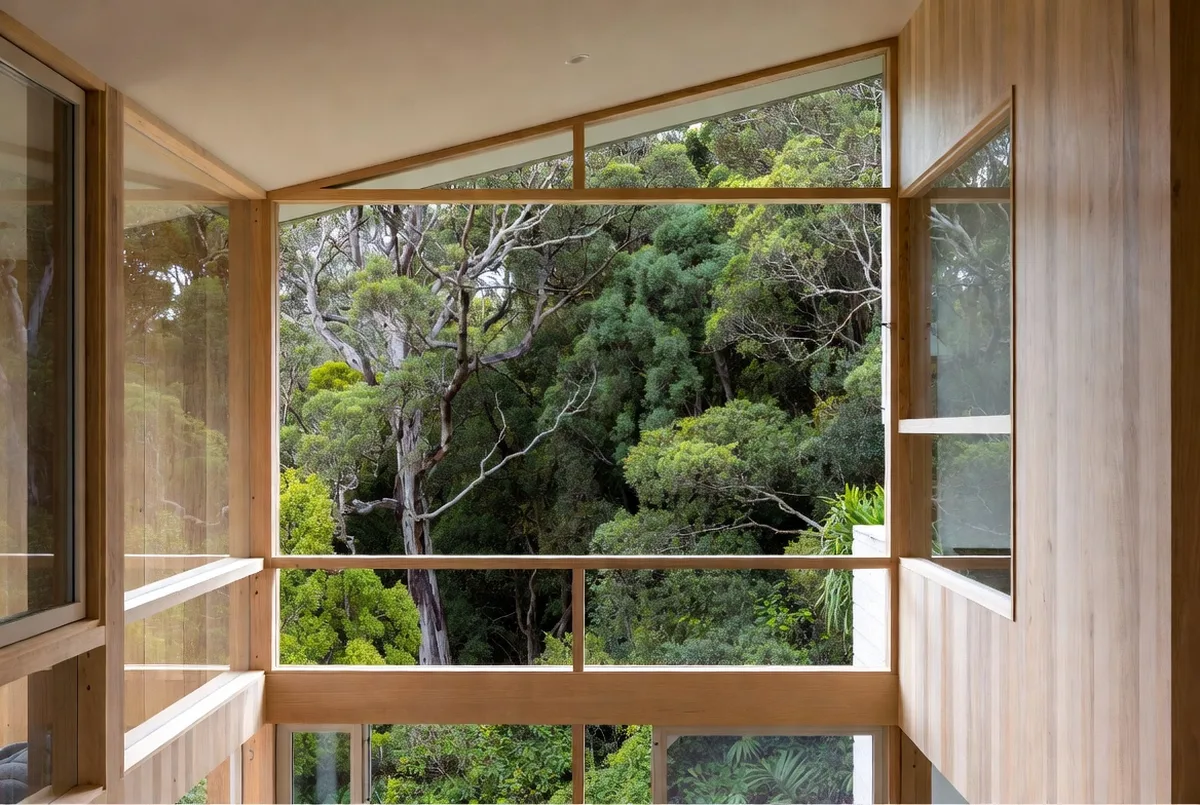
An architectural home is one designed as a specific response to a specific site and a specific way of living, rather than selected from a range and placed on a section. The markers are design intent carried all the way through: how the home sits on its land, how it takes light through the day and the year, how spaces are proportioned and sequenced, and how materials are chosen and detailed. Expense is not the test, and neither is style. A modest, carefully designed home is architectural; a large, expensively finished house assembled from catalogue decisions is not, however impressive it looks in photographs.
Key Questions Answered
What makes a home architectural?
It is designed as a specific answer to a specific site and household, with design intent carried consistently through orientation, light, proportion, sequence, materials and detailing, rather than assembled from standard options.
Is architectural just a word for expensive?
No. Expense buys finishes; it does not buy design intent. A modest home designed carefully for its site is architectural, and a large, lavishly finished house of catalogue decisions is not.
Does it mean a particular style?
No. Architectural describes how a home was arrived at, not how it looks. A gabled rural home and a flat-roofed coastal one can both be architectural, or neither can be.
Where do you notice the difference?
On an ordinary day. Where the sun lands at breakfast in winter, whether the entry works with wet coats and shopping, whether the noisy rooms sit away from the quiet ones. Design quality shows up in daily use, not in photographs.
Does architectural mean high performance?
Not automatically, and the two should not be confused. Plenty of striking homes perform poorly. The best architectural homes integrate performance into the design intent from the outset (PHINZ) rather than adding it afterwards.
In This Guide
Key Takeaways
- An architectural home is a specific response to a specific site and household, not a selection from a range of options.
- Design intent must carry through orientation, light, proportion, spatial sequence, materials and detailing to count.
- Expense and size are not the test; a modest, carefully designed home is architectural and a large catalogue-assembled one is not.
- Architectural describes how a home was arrived at, not a visual style; any form can qualify or fail.
- The difference is felt in ordinary daily use, and the best architectural homes integrate performance from the start (PHINZ).
What does architectural actually mean?
It describes how a home was arrived at, not how it looks or what it cost. An architectural home is designed as a specific answer to a specific site and a specific household: this land, this aspect, this weather, these people and the way they actually live. Everything follows from that. A house selected from a range and placed on a section is a different product, and a perfectly reasonable one, but it answers a general question rather than yours.
This is why the word gets misused so freely. It is attached to price, to size, to black cladding and flat roofs, none of which are the test. The test is whether there is design reasoning running the whole way through, and whether that reasoning came from your site rather than from a catalogue. Our related guide, what sets a high-end build apart, covers the construction side of the same question.
What are the markers of real design intent?
Design intent shows up in a handful of places, and it has to be present in all of them to count. How the home sits on its land, including what it turns towards and what it turns away from. How it takes light across a day and across a year, not just at the moment of the photograph. Proportion, the size and shape of rooms relative to each other and to a human being. Sequence, what you pass through to get where you are going. And materials, chosen and detailed for how they will weather and feel.
| Marker | Architectural home | Catalogue house |
|---|---|---|
| Siting | Placed for sun, shelter and outlook | Placed to fit the section |
| Light | Designed across day and season | Windows where walls allow |
| Proportion | Rooms sized in relation to each other | Rooms sized to a standard |
| Sequence | Considered arrival and movement | Corridor to bedrooms |
| Materials | Chosen for weathering and detail | Chosen from options offered |
Miss one of these and a home can still be attractive. Miss several and it is a well-finished house, which is a fine thing to be, just not the same thing.
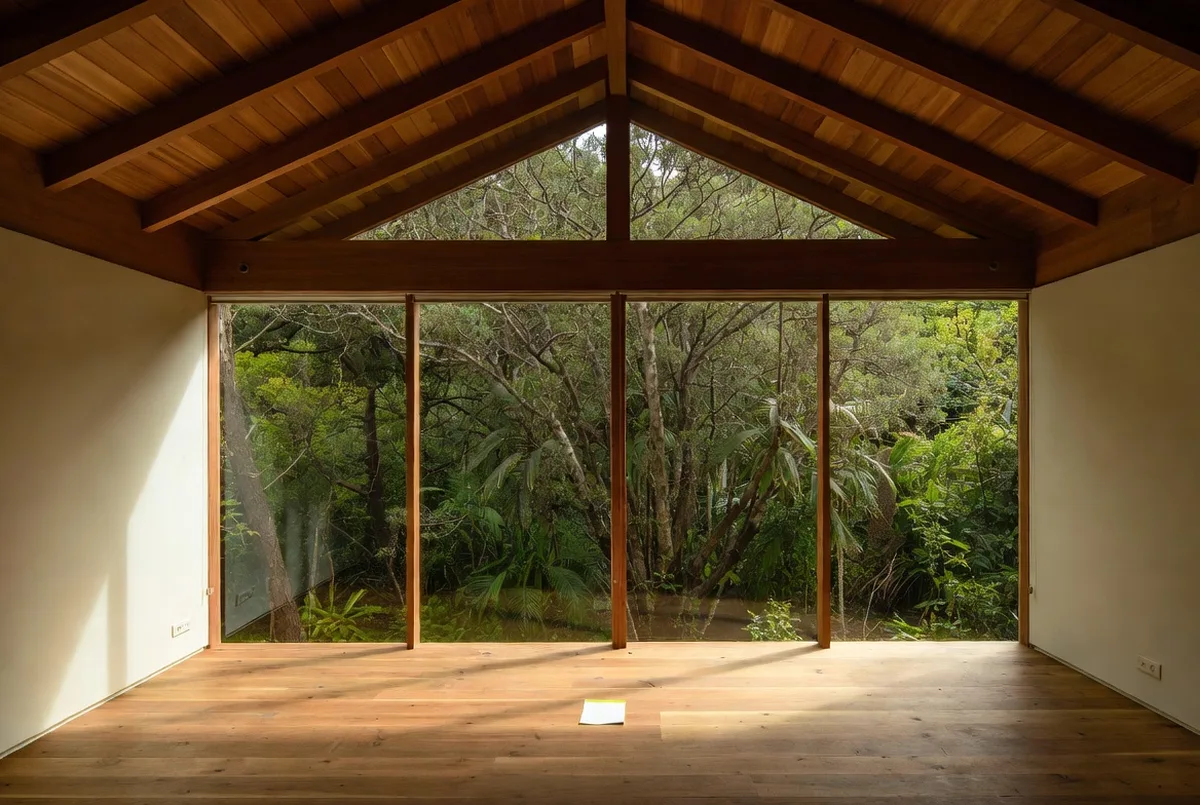
Why is it not about money, size or style?
Because none of them supply design reasoning. Money buys finishes, and finishes are the last and most changeable layer of a home; an expensive house assembled from catalogue decisions is an expensive catalogue house. Size can actively hide poor design, since a large home can solve its problems with floor area rather than thought, and some of the most genuinely architectural homes we have built are among the more modest. Constraints tend to produce better thinking than budget does.
Style is the most common confusion of all. A flat roof and a wall of glass are choices, not credentials, and applied without reasoning they routinely produce homes that overheat in summer, lose heat in winter and sit awkwardly on their land. A gabled rural home can be far more architectural than a fashionable box. The form should follow the reasoning; when it substitutes for it, you get a house that photographs better than it lives.
Where do you actually notice the difference?
On an ordinary Tuesday, not on handover day. Whether winter sun reaches where you eat breakfast. Whether the entry copes with wet coats, muddy boots and an armful of shopping. Whether the noisy end of the house sits away from the sleeping end. Whether you can see the weather coming. Whether the spaces you use daily are the good ones, rather than the formal room nobody sits in. These are unglamorous tests and they are the whole point.
In this region there is a specific version of it: a house designed for the view alone gives you a deck you cannot use when the wind is up. A designed response gives you a second, sheltered outdoor space so there is always somewhere usable, which we cover in the best areas to build in Nelson Tasman. That is design intent doing its job in a way you feel weekly for decades.
Does architectural mean high performance?
Not automatically, and conflating the two has produced a lot of beautiful, uncomfortable houses. Design quality and building performance are separate axes: a striking home can be cold, draughty and expensive to run, and a plain one can be superb. The reason they belong together is that both are decided early and are effectively permanent, so a home that ignores performance at design stage is very difficult to rescue later.
The best architectural homes treat performance as part of the design intent from the first sketch: orientation for winter sun, a continuous insulated and airtight envelope, glazing sized and placed for both view and comfort, ventilation planned rather than added (PHINZ). Done that way, performance does not compromise the architecture, it enables it, because rooms can be generous and glassy without being unpleasant to sit in. Our guide to the five Passive House principles explains the mechanics.
What is the bottom line?
Architectural is not a price bracket, a size or a style. It means the home was designed as a specific answer to your site and your life, with that intent carried through siting, light, proportion, sequence, materials and detailing. You test it by asking why about every decision and seeing whether the answers connect back to the land, the sun and how you actually live. And you feel the result on ordinary days rather than in photographs.
If you want a home designed that way in Nelson Tasman, arrange a consultation. Bring your site and how you want to live in it, and we will start from there rather than from a plan.
Frequently Asked Questions
Can a home be architectural without an architect?
Yes, in the sense that matters. What counts is genuine design thinking applied to your site and life, which can come from an architect, an architectural designer, or a designer and builder working closely together. What does not count is choosing a plan and adjusting the cladding.
Is a flat roof or lots of glass what makes it architectural?
No, and that assumption produces some poor houses. Those are stylistic choices, and applied without design reasoning they often create homes that overheat, leak heat or fight their site. Form should follow the reasoning, not stand in for it.
How do I tell if a design is genuinely resolved?
Ask why. Why is the living room here, why does this window sit at this height, why does the roof do that? A resolved design has an answer to every why that connects back to the site, the sun or how you live. An unresolved one answers with taste, or with nothing.
Does an architectural home cost much more?
It costs more than a volume house because it is designed and built once rather than repeated, and because the detailing takes more time. But good design also removes waste, unused space, awkward structure, rooms that never get used, so it is not simply the same house at a higher price.
Is a big home more architectural than a small one?
Often the reverse. Constraints force decisions, and a small home that works beautifully usually reflects harder design thinking than a large one that solved its problems with floor area. Some of the most architectural homes we have built are among the more modest.
Can you make an existing house architectural?
You can lift it a long way. A good renovation reorganises how light, movement and outlook work rather than just refinishing surfaces, and the result can feel transformed. Whether to renovate or start again depends on the bones you are starting with.
Research Report: Defining the Architectural Home
Read Full ReportDesign intent as the differentiator, and why cost, scale and style are not.
Planning a build in Nelson Tasman?
Talk to Ecotectural early and keep control of your design and budget from day one.
Arrange a consultation