

Seven Passive House Myths, Debunked
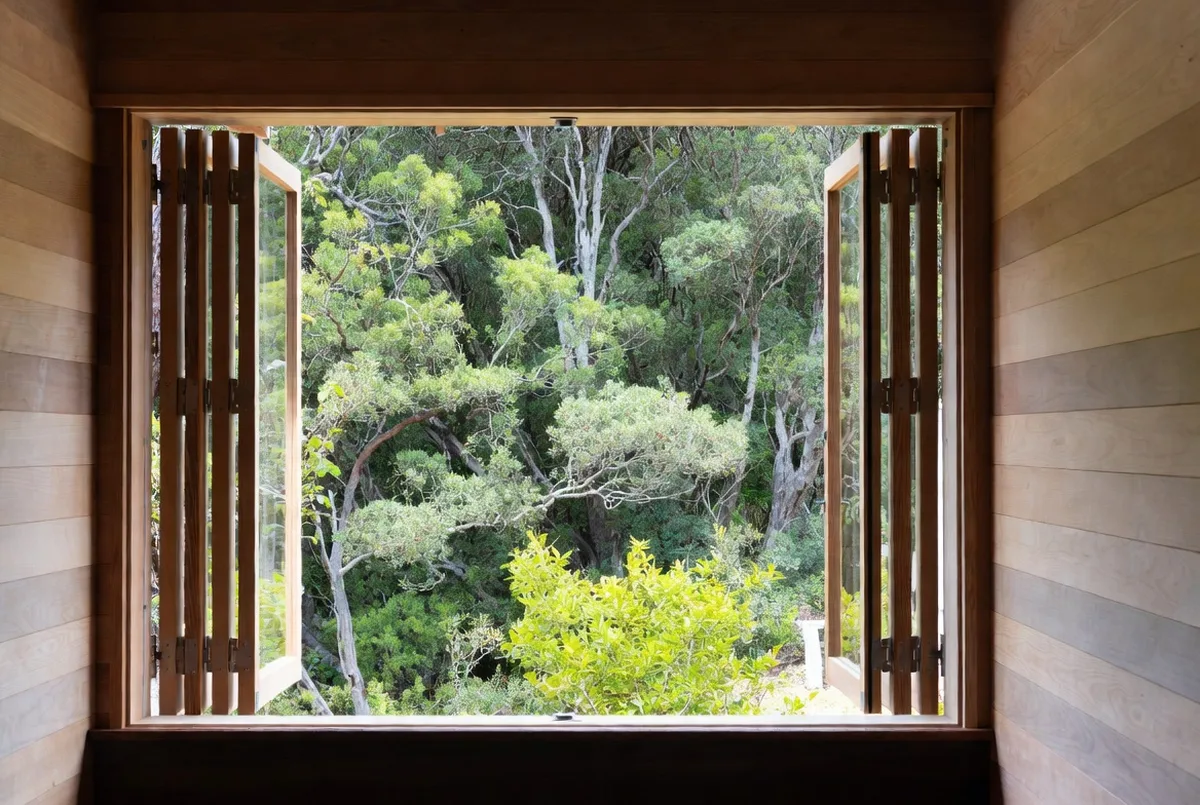
The most persistent Passive House myths are that you cannot open the windows, that the house is stuffy, that it only suits cold climates, that it must look like a modernist box, that the ventilation is noisy and expensive, that it costs far more than it does, and that the mild New Zealand climate makes it pointless. Almost all of them come from confusing airtight with sealed. A Passive House is a normal home with a continuous insulated envelope, controlled ventilation and careful detailing, and you can open every window in it whenever you like (PHINZ). The one myth with real substance is overheating, and it is a design problem with a design answer.
Key Questions Answered
Can you open the windows in a Passive House?
Yes, any of them, whenever you like. The difference is that you no longer have to open them to get fresh air, because ventilation is supplied continuously and filtered regardless of the weather.
Is a Passive House stuffy?
The opposite. It has continuous filtered fresh air, whereas a leaky house is ventilated hardest on cold windy nights and barely at all on still days, which is why leaky homes manage to be both draughty and stale.
Does it only suit cold climates?
No. The standard is about controlling heat flow in both directions, so it works in mild and warm climates too. In New Zealand the winter comfort gain is large because our housing stock starts from a low base.
Does it have to look modernist?
No. Passive House is a performance standard, not a style. The envelope and detailing are what matter, and they can sit behind a gabled rural home just as easily as a flat-roofed box.
Is overheating a real risk?
It can be, and it is the myth with genuine substance. A well-insulated home with too much unshaded glass will overheat, which is why shading, glazing specification and orientation are designed deliberately rather than left to chance.
In This Guide
Key Takeaways
- Airtight does not mean sealed: you can open any window at any time, you simply no longer need to for fresh air.
- A Passive House has continuous filtered ventilation, so it is fresher than a leaky home rather than stuffier (PHINZ).
- The standard controls heat flow in both directions, so it suits mild New Zealand conditions, not only cold climates.
- Passive House is a performance standard, not an architectural style; any form can meet it.
- Overheating is the one myth with real substance, and it is solved at design stage through shading, glazing and orientation.
Where do these myths come from?
Almost all of them from a single confusion: hearing airtight and picturing sealed. An airtight building is one where air does not leak uncontrolled through the fabric, at junctions, around windows, through penetrations. It is not a building you cannot open, and it is not a building without fresh air. Once you separate those two ideas, most of the objections dissolve, because they were objections to something nobody is proposing.
The rest come from unfamiliarity. Passive House is common enough in parts of Europe to be unremarkable and still novel enough here that people fill the gaps with guesses (PHINZ). Below are the seven we hear most, with what is actually true. If you want the underlying mechanics first, the five principles is the place to start.
Myths one to three: windows, stuffiness and climate
You cannot open the windows. You can open all of them, any time. What changes is that you are opening a window because it is a beautiful day, not because the bedroom has gone stale. That is a gain in freedom, not a loss of it.
It is a stuffy sealed box. A Passive House exchanges its air continuously and filters it coming in, which is more ventilation than most homes get. The stuffiness people are imagining is what actually happens in an ordinary house overnight with the windows shut. Ours is the version that keeps breathing while you sleep, as mechanical ventilation with heat recovery explains.
It only suits cold climates. The principles control heat flow in both directions, so they apply as readily to a mild climate as a severe one. The New Zealand case is strong precisely because so much of our housing is cold, damp and costly to heat, so the improvement is felt immediately (BRANZ).
Myths four and five: cost and appearance
It costs a fortune. It costs meaningfully more than building to the code minimum, and we would never pretend otherwise. But the premium is a percentage, not a multiple, and it buys permanent running-cost reductions and a level of comfort that cannot be retrofitted later. The honest way to think about it is as a specification decision to weigh against other things you might spend the same money on, most of which will not still be paying you back in thirty years.
They all look the same. A performance standard says nothing about appearance. A continuous, well-detailed envelope slightly rewards simpler forms, since every jog and junction is another place to get the detailing right, but that is a nudge rather than a rule. We have built to this standard behind entirely conventional-looking homes, and what makes a home architectural covers why style and substance are separate questions anyway.
Myths six and seven: the ventilation, and whether it is worth it here
The ventilation is noisy and expensive. A correctly designed, correctly commissioned system is barely audible and costs very little to run, because it is moving air with fans rather than generating heat, and it recovers most of the warmth it would otherwise lose. Where systems are noisy, the cause is nearly always undersized or badly routed ducting or commissioning that was skipped.
It is not worth it in a mild climate. This is the one that costs New Zealanders the most. Mild does not mean comfortable: our winters are long, damp and lived through in buildings that struggle, and the health consequences of cold damp housing are well documented. The comfort difference is felt daily, and we set out the full weighing in is a passive house worth it.
| Myth | What is actually true |
|---|---|
| Windows cannot open | All of them can, any time |
| It is stuffy | Continuously ventilated and filtered |
| Cold climates only | Controls heat flow both directions |
| It costs a fortune | A percentage premium, permanently repaid |
| They all look the same | Performance standard, not a style |
| Noisy ventilation | Design and commissioning issue |
| Pointless in a mild climate | Mild is not the same as comfortable |
The one myth with real substance
Overheating. A very well-insulated home that has been given large areas of unshaded glass, particularly facing the wrong way, will get hot and will hold that heat, and pretending otherwise does nobody any favours. It is a genuine failure mode and it has produced some uncomfortable houses.
It is also entirely a design problem with a design answer: orientation, the size and placement of glazing, external shading sized for the summer sun angle, thermal mass where it helps, and a ventilation strategy that can purge heat. Solved at concept stage it simply does not arise; discovered afterwards it is expensive and awkward to fix. That is the strongest practical argument for getting performance thinking into the design from the first sketch rather than adding it later.
What is the bottom line?
Six of the seven objections are misunderstandings that trace back to confusing airtight with sealed. You can open the windows, the house is fresher rather than stuffier, the standard suits a mild climate, it does not dictate a style, and the ventilation is quiet and cheap to run when it is designed properly. The premium is real but proportionate and it keeps paying back.
The seventh, overheating, is worth taking seriously and is solved by designing shading, glazing and orientation deliberately. If you have heard any of these and wondered, arrange a consultation and ask us directly. We would rather answer the objection than have it quietly talk you out of a home that would have suited you.
Frequently Asked Questions
Myth one: you cannot open the windows.
You can open every window in the house whenever you want, and people do. The airtightness is about eliminating uncontrolled leakage through the fabric, not about locking the building shut. What changes is that opening a window becomes a choice about enjoying a nice day rather than a necessity for breathable air.
Myth two: it is a stuffy sealed box.
A Passive House exchanges its air continuously and filters it on the way in, which is more ventilation than a typical home receives, not less. The stuffiness people imagine is what actually happens in ordinary houses overnight, when windows are shut and there is no mechanical ventilation running.
Myth three: it only makes sense in a cold climate.
The principles govern heat flow in both directions, so they apply anywhere. In New Zealand the case is strong precisely because so much of the existing housing stock is cold, damp and expensive to heat, so the improvement is dramatic even in a mild climate (BRANZ).
Myth four: it costs a fortune.
It costs meaningfully more than building to code minimum, and the premium is real, but it is a percentage rather than a multiple, and it buys permanent reductions in running cost along with comfort you cannot retrofit. Treat it as a specification decision to weigh, not an exotic luxury.
Myth five: they all look the same.
Performance standards do not dictate appearance. The envelope has to be continuous and well detailed, which rewards simpler forms slightly, but that is a nudge rather than a rule. Gabled, rural, coastal or contemporary can all meet the standard.
Myth six: the ventilation is noisy and expensive to run.
A properly designed and commissioned system is barely audible and uses very little power, since it is fans rather than heating elements, and it recovers most of the heat it would otherwise lose. Noise complaints trace to poor duct design or commissioning, not to the technology.
Research Report: Passive House Misconceptions in NZ
Read Full ReportSeven common objections tested, and the one with technical merit.
Planning a build in Nelson Tasman?
Talk to Ecotectural early and keep control of your design and budget from day one.
Arrange a consultation